

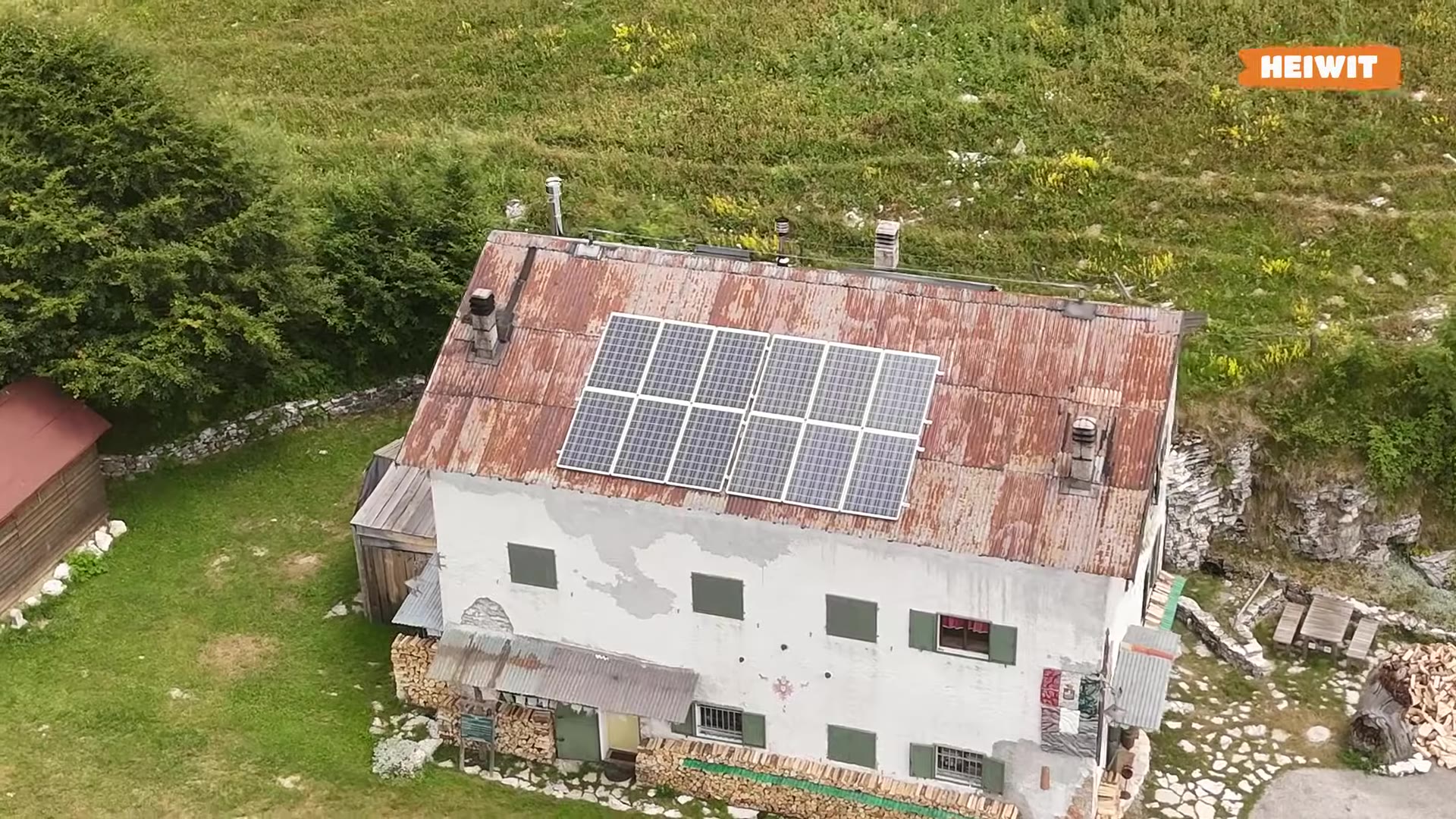
The Val Tosella Refuge is located at an altitude of 1,376 metres, on Monte Grappa, in the municipality of Arsiè (BL). It is not connected to the electricity grid. The refuge's electricity comes from the solar panels on the roof and passes through a Heiwit system with 10 kWh sodium-ion battery. In the video we show you the system and the place that hosts it.
A refuge off the electricity grid
The refuge stands in a grassy hollow of the Grappa massif, at km 38 of the Strada Cadorna. The power line does not reach this far up. The refuge is therefore off-grid: it produces and stores on its own the electricity it uses.
In a home connected to the grid, the battery mainly serves to save money. If it is flat, the power still comes from the grid. Here that is not the case. The battery is the refuge's only energy reserve, and all the electricity depends on the Heiwit system.
During the day the panels power the loads and charge the battery. In the evening, at night and on days without sun, it is the battery that supplies the energy.
The installed system
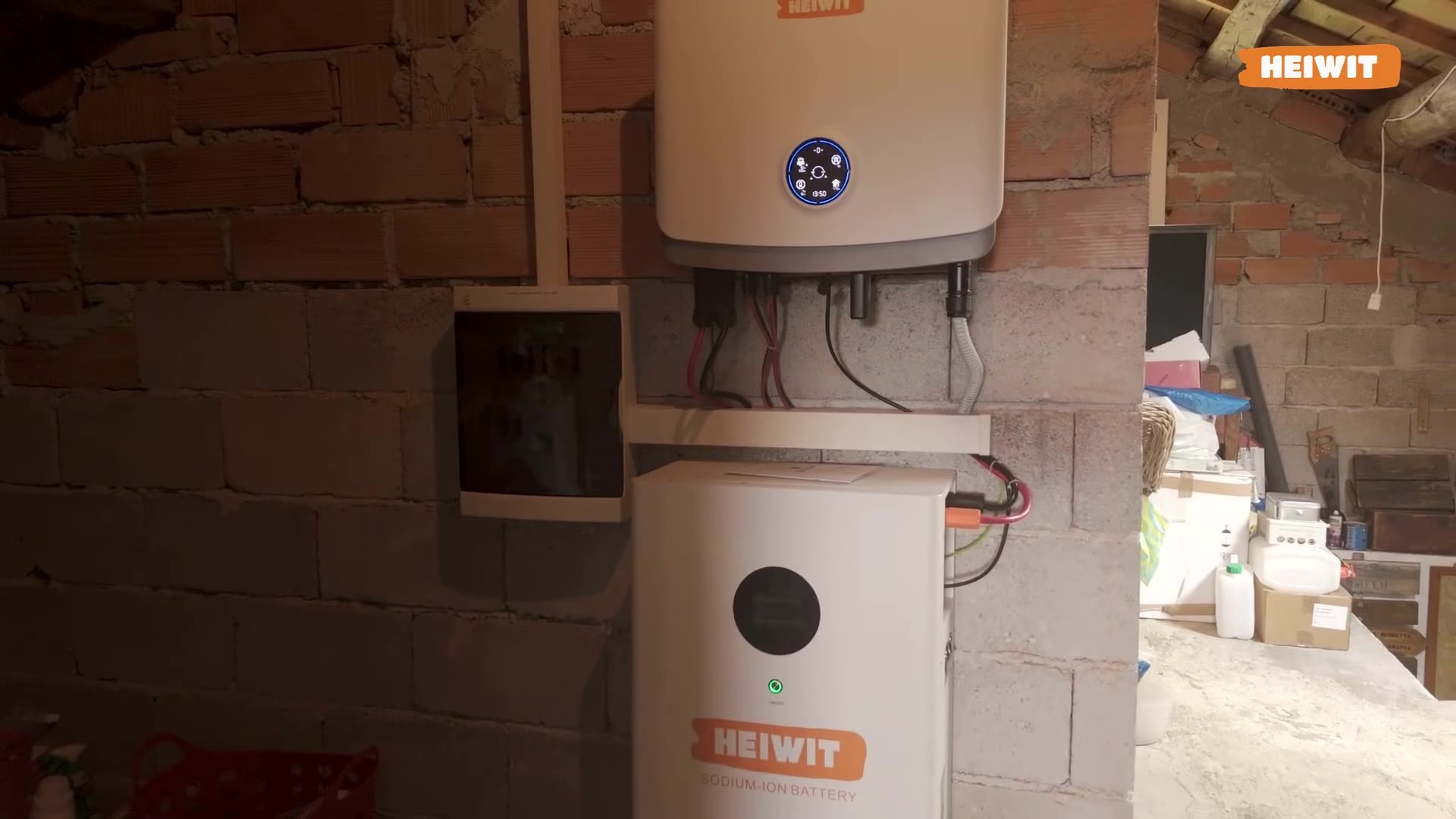
The system at Rifugio Val Tosella consists of:
- solar panels on the roof of the refuge;
- a Heiwit hybrid inverter from the Virgoseries, which manages the panels, the battery and the loads;
- una 10 kWh Heiwit sodium-ion battery.
The inverter and battery are installed in a plant room inside the building. This is the location specified in the manual: the battery must be installed indoors.
In winter, at 1,376 metres
At this altitude the winter is long and temperatures drop a great deal. For a battery storage system it is the most demanding time of year. The days are short, the sun is low and the battery has to cover more hours of darkness.
The system at Rifugio Val Tosella gets through the cold months without difficulty and without any significant loss of performance. For a refuge with no grid connection, that is the figure that matters most: the energy has to be there in January too.
The operating limits are those given in the datasheet. The battery discharges from −25 °C to +60 °C and charges from 0 °C to +60 °C. Installed indoors, it is sheltered from snow and the harshest frost. All the details are on the page about the temperature range of Heiwit batteries.
What this installation demonstrates
An off-grid mountain refuge brings together the toughest conditions for a battery storage system. There is no back-up grid. The winter is cold. In the winter months the panels produce less.
Rifugio Val Tosella shows that a Heiwit sodium-ion battery can handle this job every day. The same solution suits mountain huts, mountain houses and remote homes, as well as homes connected to the grid.
Do you have a building in the mountains or far from the grid? Get in touch with one of our partner installers or scriveteci: together we will assess the most suitable system.
Frequently asked questions
Where is Rifugio Val Tosella?
On Monte Grappa, at an altitude of 1,376 metres, at km 38 of the Strada Cadorna, in the municipality of Arsiè, in the province of Belluno.
What does it mean that the refuge is off-grid?
It means that it is not connected to the electricity grid. All the electricity it uses is produced by the solar panels on the roof and stored in the Heiwit battery.
Which battery storage system was installed?
A 10 kWh Heiwit sodium-ion battery, paired with a Heiwit hybrid inverter from the Virgo series and the refuge's solar panels.
Does the sodium battery work in mountain cold?
Yes, within the limits of the datasheet: it discharges from −25 °C to +60 °C and charges from 0 °C to +60 °C. It must be installed indoors. At Rifugio Val Tosella the system works in winter too, without any significant loss of performance.
To find out more about the technology that powers Rifugio Val Tosella, read the page on the range of Heiwit sodium-ion batteries.
 Italian
  English
  German
  French
  Spanish
  Polish
  Dutch
Dutch  Romanian
  Hungarian
  Czech
Czech  Swedish
  Portuguese
  Greek
Greek