

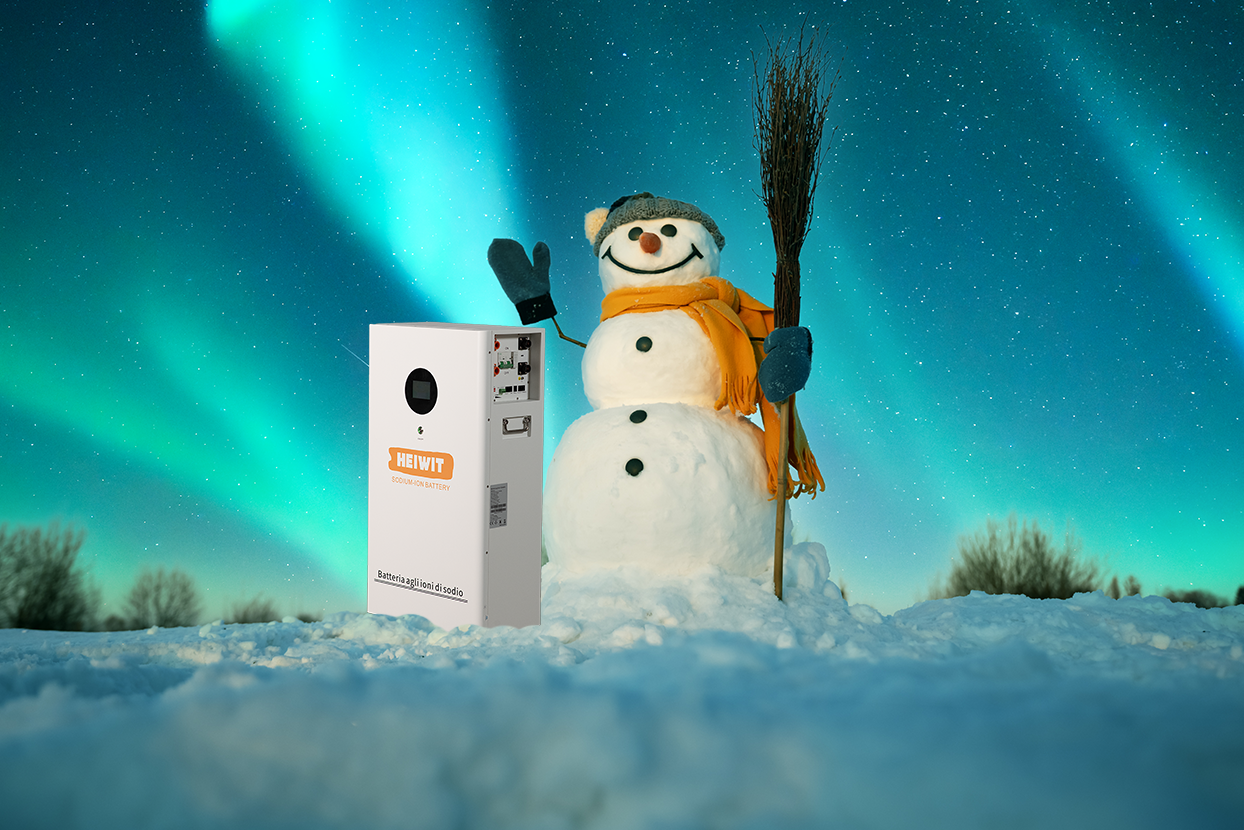
Temperature range of Heiwit batteries: datasheet and TÜV SÜD document
The Heiwit sodium-ion battery currently on sale discharges between −25 °C and +60 °C and charges between 0 °C and +60 °C. It must be installed indoors.
The system made up of the Virgo inverter and the battery holds CEI 0-21 certification issued by TÜV SÜD on the basis of the type tests (document no. D 132944 0003). Below we set out the ranges given in that document, which are the inverter's operating parameters.
TÜV SÜD document values for the inverter-based system
- Operating range: by -25 °C a +60 °C
- Range at full power: by -25 °C a +40 °C
- Storage range: by -40 °C a +70 °C
- Relative humidity: 0-100 %RH
What do these intervals mean
Operation indicates the temperatures at which the system can operate safely.
Full power defines the range within which the system can continuously deliver its rated power.
Storage refers to the recommended conditions for transport and storage when the inverter is not in use.
These values come from the type tests underlying the CEI 0-21 certification issued by an independent body, TÜV SÜD. To maximise performance and service life, installation in accordance with the manual and current regulations is always recommended.
Why it is important
A wide temperature range simplifies system design and reduces the need for
auxiliary thermal conditioning systems, with advantages on reliability and operating costs.
The battery's charge and discharge temperature limits are set out in full in the 10 kWh Heiwit-NA battery data sheet, along with downloadable datasheets and manuals.
Technical content drafted and subject to internal review by HEIWIT R&D, the function responsible for classifying cells and conducting tests on Heiwit storage systems.
 Italian
 English
 German
 French
 Spanish
 Polish
 Dutch
 Romanian
 Hungarian
 Czech
 Swedish
 Portuguese
 Greek