

Sodium-ion
batteries.
Tomorrow's energy, already in your system.
Batterie da 10 kWh a 48 V, da abbinare agli inverter ibridi Heiwit. Un sistema che cresce con le tue esigenze, fino a 30 kWh.
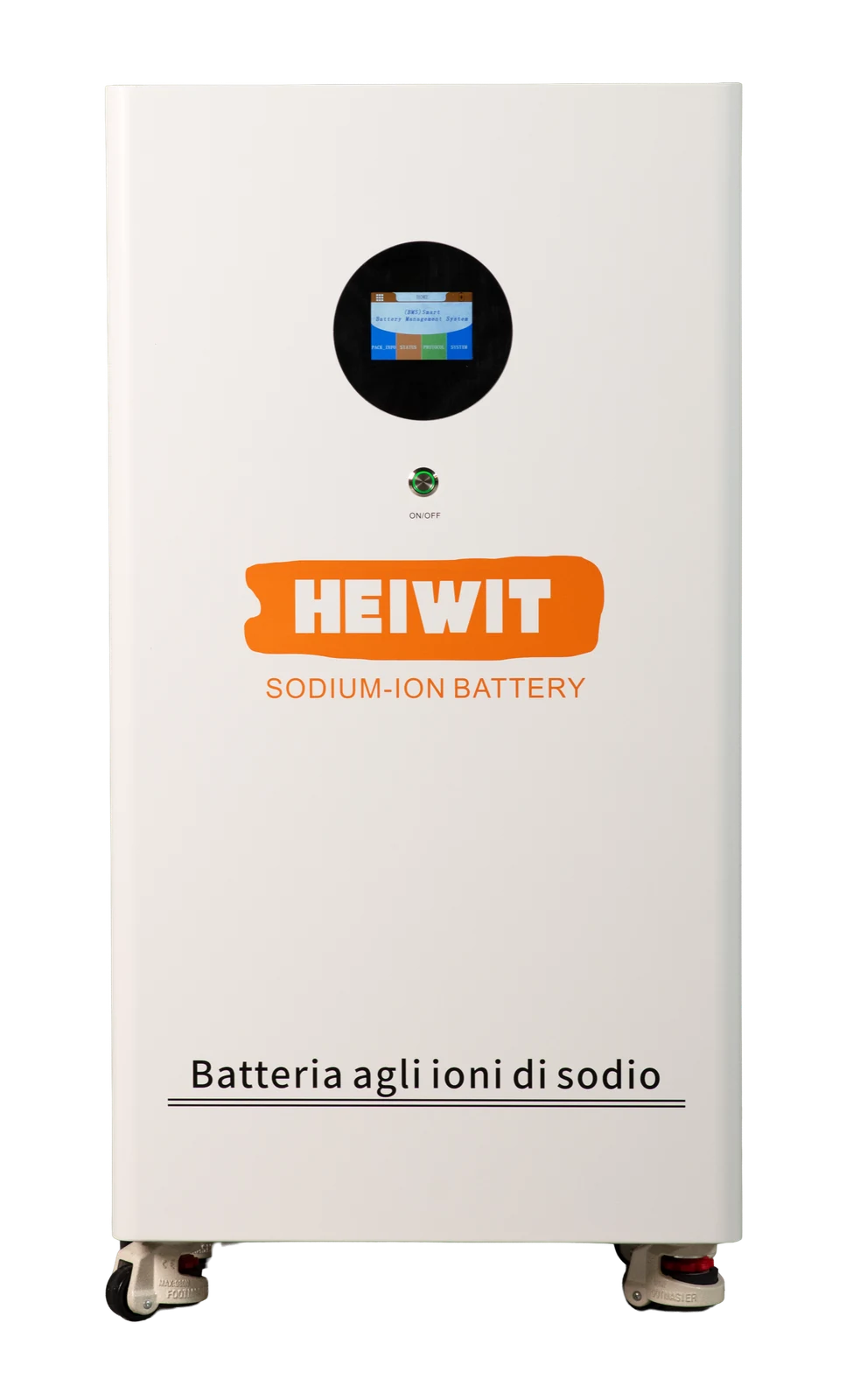
- 10 kWh
- Capacità per batteria
- 48 V
- Tensione della batteria
- 30 kWh
- Fino a 3 batterie in parallelo
- 10 years
- Warranty
One system.
Multiple configurations.
La batteria da 10 kWh lavora con gli inverter ibridi Heiwit VIRGO e LYBRA. È possibile collegare fino a 3 batterie in parallelo per inverter, per una capacità totale di 30 kWh.
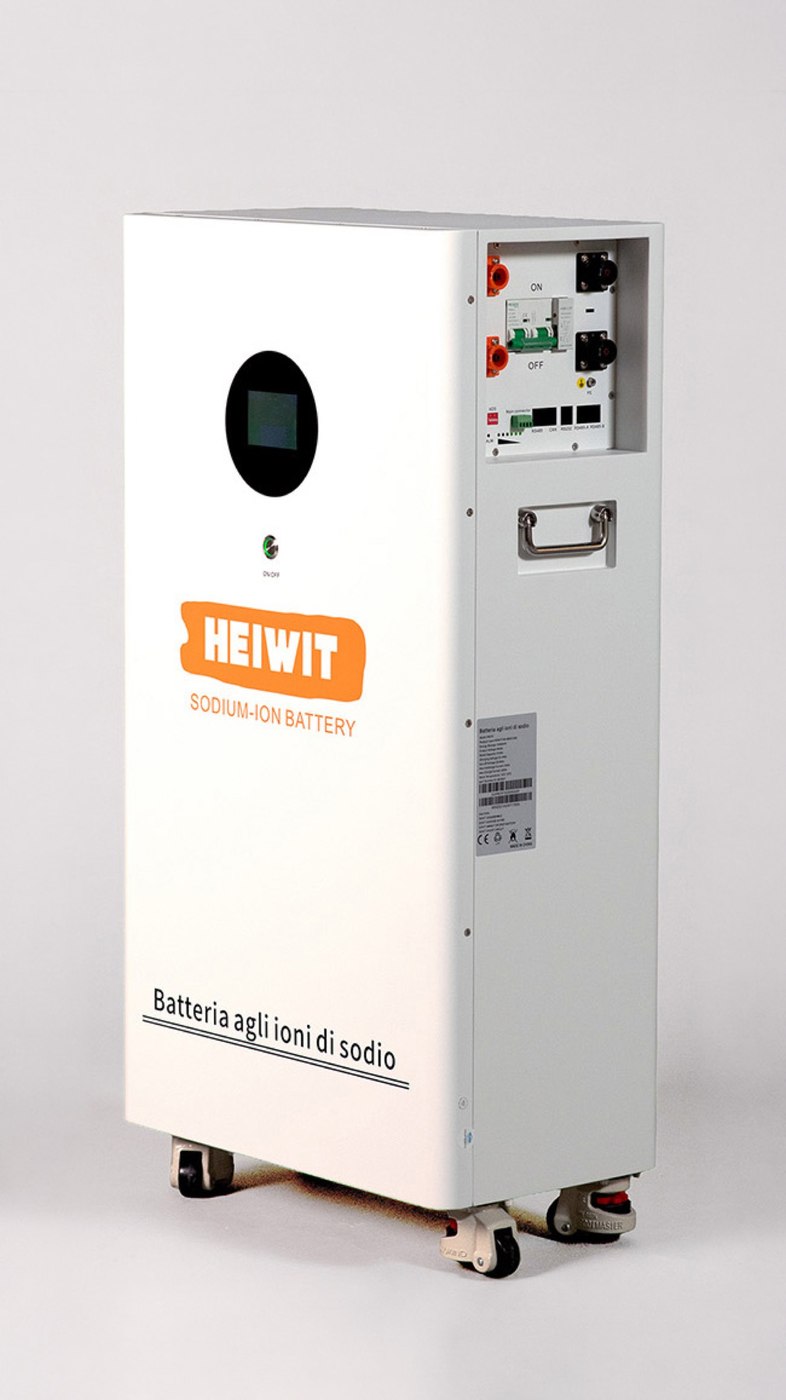
10 kWh sodium-ion battery
48 V and integrated BMS, to manage residential and commercial energy storage. The cells contain neither lithium nor cobalt.
Explore the productCapacity follows the needs of the system.
Parti da una batteria da 10 kWh e dimensiona l’accumulo con il tuo installatore. Puoi collegare fino a 3 batterie in parallelo, per un totale di 30 kWh.
The battery is designed for direct connection to Heiwit VIRGO and LYBRA inverters. On an existing system, the Heiwit inverter can be connected to the AC line while keeping the PV inverter already installed. Learn more about compatibility.
The data at a glance.
Le caratteristiche della batteria e i risultati di prova aiutano a valutare la configurazione più adatta all’impianto.
- Capacità della batteria
- 10 kWh
- Voltage
- 48 V
- Scalability
- Fino a 3 batterie in parallelo / 30 kWh
- Battery management
- Integrated BMS
- Discharge temperature
- From −25 to +60 °C
- Charge temperature
- From 0 to +60 °C
- Measured self-discharge
- 0.35% per month*
- Warranty
- 10 years
- Compatible inverters
- Heiwit VIRGO and LYBRA
- Remote monitoring
- Heiwit app
*Measured on several batteries, at room temperature, at the latitude of Milan.
Over 6,500 cycles
Durata stimata di carica e scarica. Nel test a 6.500 cicli, la capacità residua è rimasta superiore al 70%.
Service life depends on depth of discharge, temperature, current and average state of charge: cycles do not automatically equate to years of service.
Over 90% at −20 °C
Capacity retained by the polyanionic cell in cold tests. The result refers to the cell and test protocol described in the in-depth article.
Read the cold testsSodium, for energy
that lasts.
In stationary storage, what matters is service life, safety, thermal behaviour and the cost of the energy exchanged over the entire life of the system.
Materials and recovery
Sodium is an abundant resource. Heiwit cells contain neither lithium nor cobalt; the battery is designed to facilitate the recovery and recycling of materials at end of life.
Layered oxides
Ions move between oxide layers. This is the chemistry of the 2025–2026 version, with a good balance between energy per unit mass and performance.
NFPP polyanionics
Sodium iron phosphate-pyrophosphate forms a rigid three-dimensional lattice. This evolution of the chemistry prioritises stability and behaviour at extreme temperatures.
Learn more about NFPPHeiwit develops the energy storage system — battery pack, BMS, electronics, inverter and integration — and selects and qualifies the cells used.
Sodium-ion and LFP.
Two technologies with different characteristics. Lithium iron phosphate offers more energy per kilogram; sodium is particularly attractive for stationary storage.
| Parameter | Lithium iron phosphate · LFP | Sodium-ion |
|---|---|---|
| Energy density | 120–180 Wh/kg, typical | 100–160 Wh/kg, typical depending on chemistry |
| Cycle life | High | High; depends on the cell and test conditions |
| Low temperature | Marked capacity loss below zero | Limited loss, especially in polyanionic chemistries |
| Thermal stability | Good, among the best of the lithium chemistries | Good, with additional margin in polyanionic chemistries |
| Raw materials | Lithium, iron and phosphorus | Sodium and iron; no lithium or cobalt in the cells described |
| Deep discharge and storage | The cell does not tolerate zero volts; copper anode current collector | The cell can tolerate zero volts with aluminium current collectors, useful for storage and transport |
| Applications | Light mobility and energy storage with weight and volume constraints | Stationary storage, harsh climates and long service life |
Gli intervalli di densità sono valori tipici di mercato, non la specifica di una singola cella o della batteria Heiwit. Le caratteristiche di cella non sostituiscono i limiti operativi del sistema completo. A parità di capacità, il sodio richiede più spazio: la disponibilità va verificata in sopralluogo.
Energy density and service life in energy storage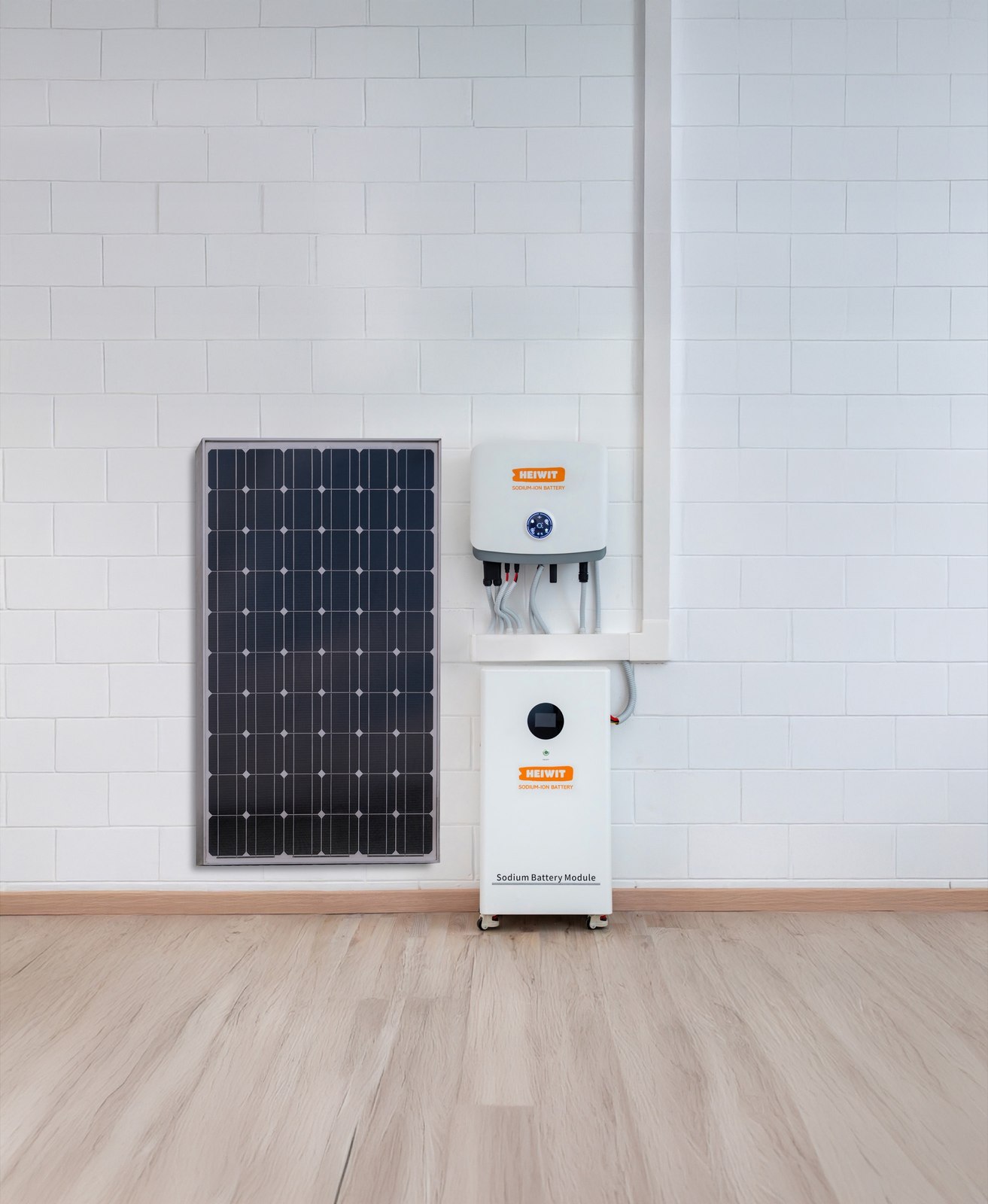
Energy under control.
Battery, BMS and inverter work together. The Heiwit installer network defines the configuration best suited to your system and your needs.
With the Heiwit app you can monitor the state of charge, efficiency and performance of the system in real time from your smartphone or tablet.
From homes to businesses.
Le configurazioni con batterie in parallelo si adattano a esigenze di autoconsumo, ampliamento dell’impianto e accumulo commerciale o industriale.
Residential
Store the solar energy produced during the day to use it in the evening and at night. Backup functions to be defined in the system configuration.
Solar PV and battery storageRetrofit
Add battery storage to your existing solar PV. The Heiwit inverter connects on the AC line and the existing one can remain installed.
Existing systemsCommercial and industrial
Multiple configurations for three-phase users, including in non-air-conditioned plant rooms. Sizing based on actual consumption and conditions.
Let's discuss your projectBESS
Larger solutions for industrial applications, with dedicated sodium-ion systems up to the 1 MWh class.
Discover our BESSFrom cell testing
to the complete system.
Safety depends on the cell chemistry, the pack, the BMS, the electronics and the quality of the installation. Thermal stability concerns the cathode and electrolyte, not sodium alone.
Explore the qualification tests- Nail penetration
- Overload
- Short circuit
- Squash
- Bake test
- Thermal control up to 300 °C
Compliance and certifications
| Scope | Standard or directive | Subject and reference |
|---|---|---|
| Italian grid · VIRGO | CEI 0-21:2022 + V1:2022 + V2:2024 | VIRGO kit + batteryTÜV SÜD · D 132944 0003 October 2025 |
| Italian grid · LYBRA | CEI 0-21:2022 + V1:2022 + V2:2024 + V2/EC:2024 + V2/EC2:2025 | LYBRA kit + batteryTÜV Rheinland · A3 50741827 0001 August 2026 |
| Electrical safety | Low Voltage Directive 2014/35/EU | Inverter: EN 62109-1 and EN 62109-2 Battery: EN IEC 62040-1 |
| Electromagnetic compatibility | EMC Directive 2014/30/EU | Inverter and battery |
| Battery system safety | PPP 51096A:2023Voluntary test | Battery pack and BMS |
The system is CE marked. For installation outside Italy, grid connection rules and the required certificates depend on the country: request the applicable documentation.
The answers,
before you choose.
For sizing and configuration, consult the Heiwit installer network.
Find an installerHow long does a sodium-ion battery last?
Does it work at low temperatures?
Can I use it with my current inverter?
How much space is needed?
Does Heiwit also make the cells?
How does the cost compare with a lithium battery?
How can I buy it?
Is it also suitable outside Italy?
Let's find the right configuration
for your system.
Tell us what you need. We'll help you explore the Heiwit system in more detail and find the approach that suits you best.
 Italian
 English
 German
 French
 Spanish
 Polish
 Dutch
 Romanian
 Hungarian
 Czech
 Swedish
 Portuguese
 Greek