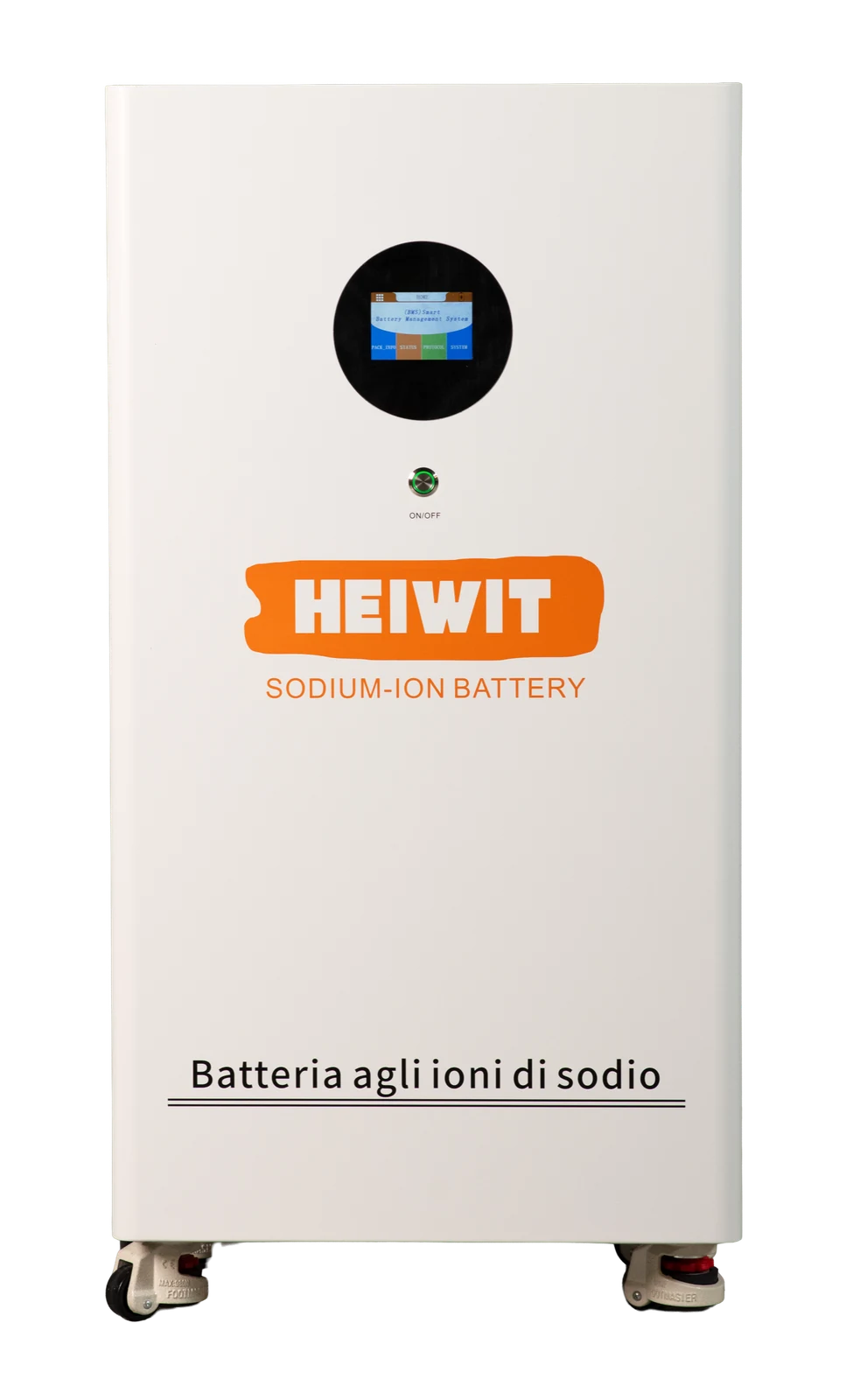
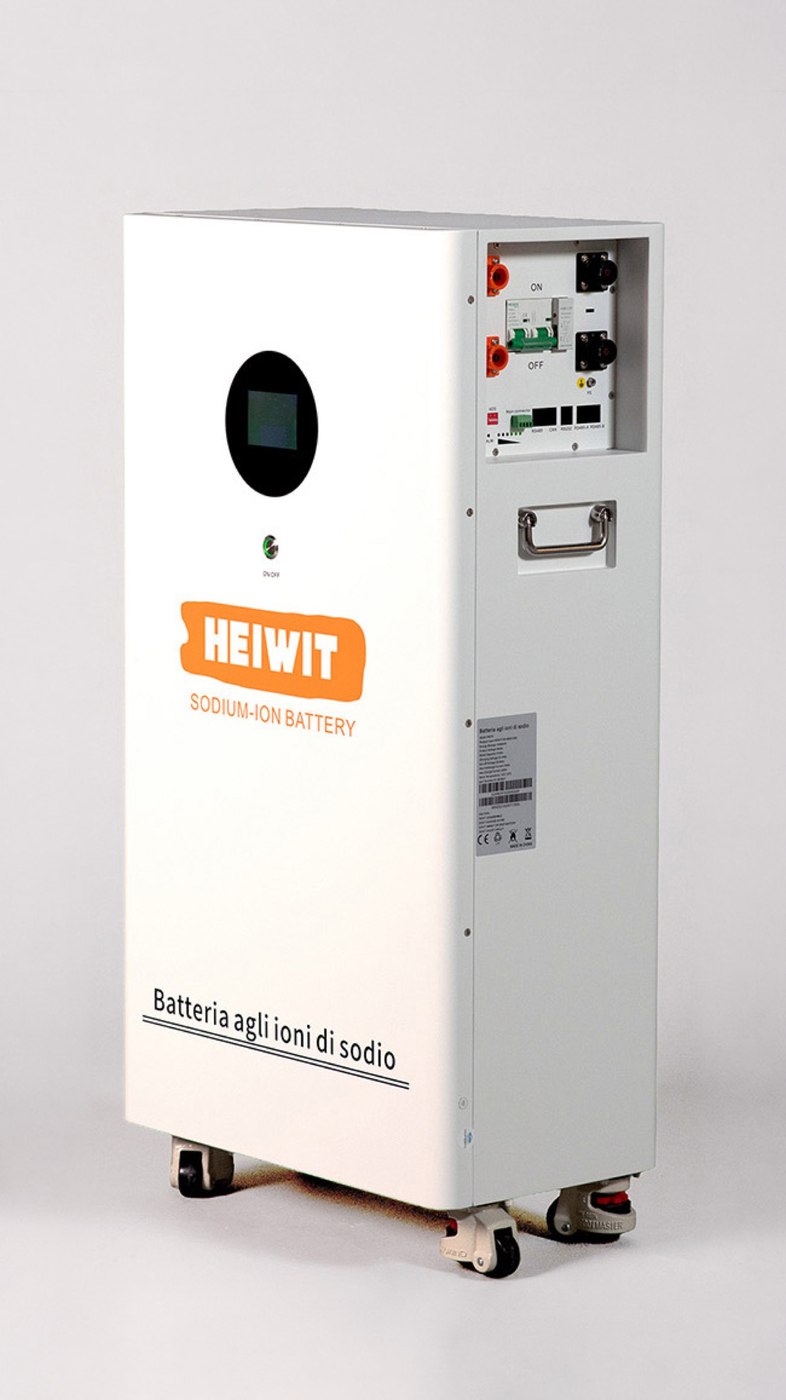
Sodium ion storage batteries
Sul fronte fiscale abbiamo raccolto quello che spetta davvero nel 2026, distinguendo privati e imprese e dicendo anche quali misure sono chiuse o non coprono la batteria: incentivi per i sistemi di accumulo.
Batteries at sodium ions represent an emerging technology in the field of energy storage, designed to offer a sustainable and cheaper alternative to traditional lithium-ion batteries. As the name suggests, these batteries use sodium, an abundant and readily available element, instead of lithium, which is rarer and more expensive.
One of the key innovations of HEIWIT is the use of sodium-ion batteries, available in modular 10 kWh units, offering a storage capacity that can be scaled to suit the system’s requirements. These batteries offer a number of environmental and operational benefits compared with their lithium counterparts.
Benefits for the Environment
- Fairly AvailableSodium is one of the most abundant elements on Earth, unlike lithium, which is limited and often mined in ways that cause significant environmental damage. The extraction of sodium has a much smaller environmental impact than that of lithium.
- SustainabilitySodium ion batteries do not require cobalt or nickel, metals often associated with unethical and environmentally harmful mining practices. This makes HEIWIT batteries more environmentally friendly and socially responsible.
- RecyclabilitySodium ion batteries are easier to recycle than lithium batteries, further reducing the environmental impact at the end of their life cycle.
- SecuritySodium ion batteries are inherently safer because they are less likely to overheat and catch fire, reducing the risks associated with their use and disposal.
HEIWIT innovation
HEIWIT offers energy storage solutions that harness the benefits of sodium-ion batteries, providing modular capacities starting from 10 kWh, which can be scaled to match the system’s power output. These solutions are ideal for industrial, commercial and residential applications, enabling more sustainable and cost-effective energy management. With HEIWIT, we are driving an energy revolution that not only improves efficiency but also respects our planet, ensuring a greener and more secure energy future.
Discover the benefits of Heiwit sodium ion batteries
Sodium ion batteries represent one of the most promising innovations in the energy storage sector, distinguished by a unique combination of sustainability, safety and longevity. In this article, we explore the main features of Heiwit sodium ion batteries and the benefits that make them an outstanding choice for those seeking a reliable and environmentally friendly storage solution.
Safety First
One of the most important aspects for any energy storage technology is safety. Unlike lithium batteries, which are known for their high reactivity and risk of fire or explosion in the event of overheating, sodium ion batteries offer much greater chemical stability. This stability comes from the less reactive nature of sodium compared to lithium, which makes these batteries safer even under extreme operating conditions. In the event of high temperatures or accidents, sodium ion batteries are designed to maintain thermal control, greatly reducing safety risks.
Heiwit sodium ion batteries are therefore ideal for domestic and commercial applications where safety is a priority. With an internal design that minimises the possibility of short circuits and an advanced battery management system (BMS), these batteries are perfect for those who want a storage system they can rely on even in the event of unexpected conditions.
Complete Recyclability for a Sustainable Future
One of the distinctive advantages of Heiwit sodium ion batteries is their 100% recyclability. The increasing focus on the environmental impact of technological materials has highlighted the importance of choosing storage solutions that do not produce waste that is difficult to dispose of. Heiwit's sodium-ion batteries are designed to be fully recyclable, which means that at the end of their life cycle, they can be disassembled and reused without harmful effects on the environment.
This ecological advantage is particularly important in the context of batteries, where material disposal is a significant challenge. Unlike lithium, which requires more complex and often polluting extraction and disposal processes, sodium is an abundant and easily recyclable element. Heiwit's sodium ion batteries are therefore a conscious choice for those who wish to reduce the environmental impact of their energy consumption, contributing to a more circular and sustainable economy.
Durability and Longevity: Over 6500 Cycles
When investing in an energy storage system, it is crucial to consider product durability. Heiwit's sodium-ion batteries excel in this respect as well, providing longer longevity than most lithium-ion batteries. With a capacity to perform over 6500 charge and discharge cycles, these batteries offer an extremely long service life, maintaining high levels of performance over time.
This extraordinary durability translates into significant savings: a battery that lasts longer means fewer replacements and an investment that pays for itself more quickly. For companies in particular, this can be a considerable economic advantage, as it reduces the operating costs associated with battery maintenance and replacement. For residential customers, too, the longevity of Heiwit batteries translates into greater reliability and the peace of mind of knowing that their storage system will be functional for many years.
Affordability: An Affordable and Sustainable Investment
Another key aspect of Heiwit's sodium ion batteries is their relatively low cost. Sodium is a much more abundant element than lithium and, as a result, the extraction and production of sodium-ion batteries is cheaper. This makes Heiwit batteries a very cost-effective option for both companies and individuals, offering an affordable and sustainable storage solution.
Unlike other batteries that require rare or expensive materials, sodium ion batteries exploit a widely available resource, reducing production costs and, consequently, the price for the end consumer. This economic convenience is not at the expense of performance, as Heiwit batteries maintain exceptional storage capacity and durability. Competitively priced, these batteries offer a unique opportunity to make sustainable energy storage accessible to an increasing number of users.
Remote Monitoring with the Heiwit Advanced App
An added benefit of Heiwit's sodium-ion batteries is the ability to monitor battery performance in real time via a dedicated app. This feature gives users complete control over their storage system, allowing them to view data such as charge status, efficiency and overall battery performance directly from their smartphone or tablet.
Remote monitoring optimises battery use, reducing energy waste and maximising efficiency. For businesses, this function is a huge advantage in terms of energy management, as it allows them to monitor consumption and intervene promptly if necessary. For residential customers, Heiwit's monitoring app also offers the convenience of having all energy information at their fingertips, helping them to use energy more consciously and efficiently.
How Do Sodium Ion Batteries Work?
On a technical level, sodium-ion batteries work in a similar way to lithium-ion batteries, but utilise the reaction of sodium ions instead of lithium. During the charging process, the sodium ions move from the anode to the cathode, storing energy. During discharge, the process reverses, allowing the stored energy to be released.
This innovative technology offers high efficiency and minimal performance degradation over time, thanks to less reactive and chemically more stable materials. The use of sodium instead of lithium enables safer thermal management and the elimination of critical materials such as cobalt, further reducing the environmental impact of production.
Versatility of Application of Heiwit Batteries
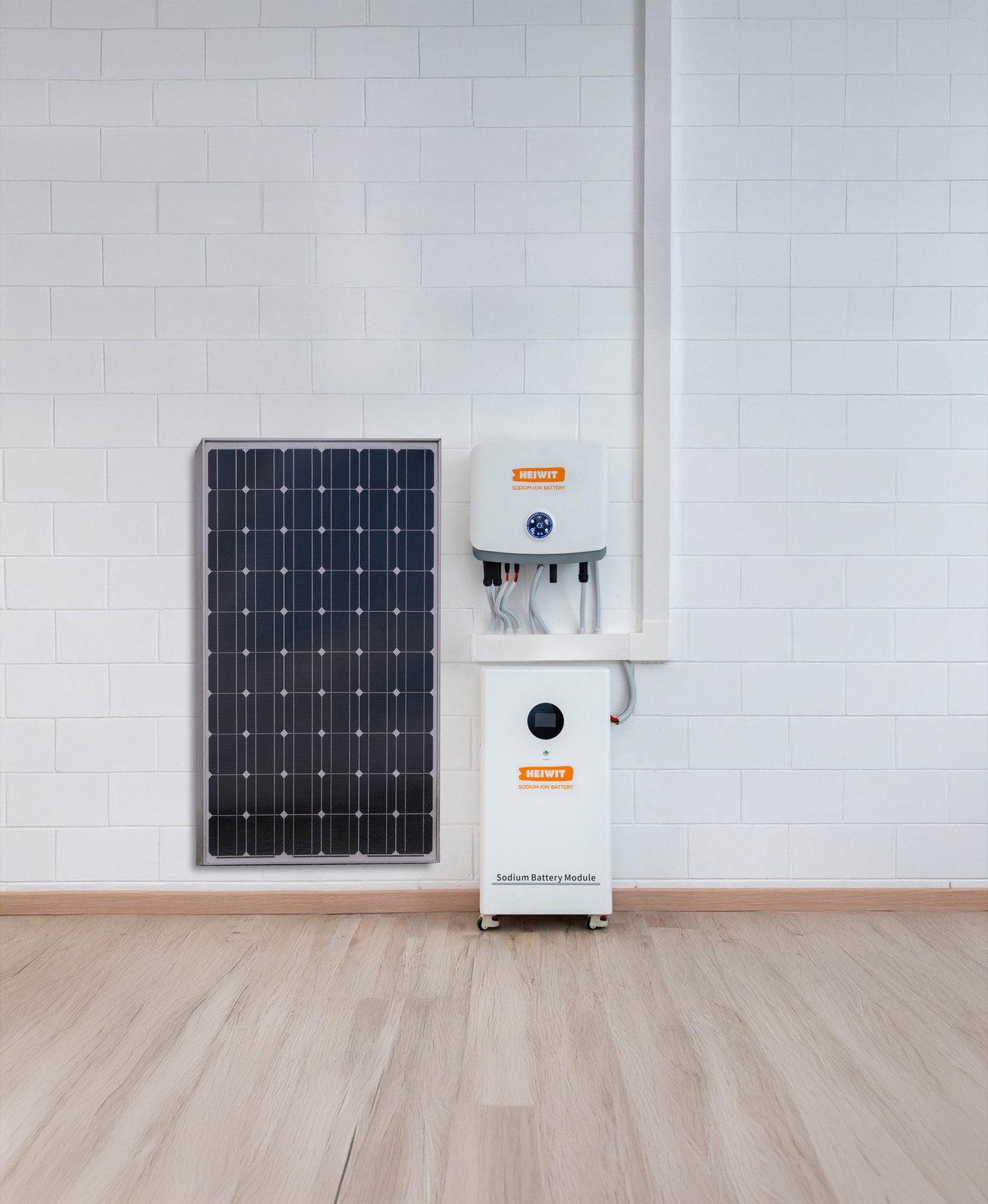
Heiwit sodium-ion batteries are incredibly versatile and can be used in a wide range of applications, both residential and commercial. They are ideal for integration with photovoltaic systems, allowing energy produced during the day to be stored and then used during the evening or night. In addition, Heiwit batteries are perfect for backup systems, ensuring continuity of power supply even in the event of blackouts or grid interruptions.
Industrial applications are equally beneficial: thanks to their ability to support high storage volumes and durability, Heiwit batteries offer a significant advantage in terms of energy savings and resource optimisation. Companies adopting these batteries not only benefit from reduced energy costs, but can also improve their environmental image by adopting sustainable technology.
Conclusions: Why Choose Heiwit Salt Batteries?
In summary, Heiwit sodium ion batteries are a modern, safe and environmentally friendly energy storage solution for those looking for a reliable, long-term system. Thanks to their safety, complete recyclability, exceptional durability of over 6500 cycles, low costs and the convenience of remote monitoring, these batteries are one of the most promising options in the energy storage market.
Whether you are a business or a residential customer, choosing a salt battery Heiwit means opting for a sustainable, state-of-the-art energy solution that meets the challenges of the energy future.
Sodium-ion technology, in detail
Sodium-ion batteries are not a universal substitute for lithium, and portraying them as such would be incorrect. They are a chemistry with a different set of trade-offs, which in some applications matter more than in others: in stationary energy storage paired with photovoltaics — where the system stays put wherever it is installed and has to operate for twenty years in an unheated room — that profile is particularly favourable.
The sections that follow explain why, with data and references to technical details.
How a sodium-ion battery works
The principle is the same as a lithium battery. There are two electrodes — a cathode, the positive electrode, and a anode, the negative — separated by a electrolyte which allows the passage of ions but not electrons.
When charging, the sodium ions leave the cathode, pass through the electrolyte and insert themselves into the anode, while the electrons travel through the external circuit. When discharging, the path is reversed, and that flow of electrons is the energy that powers the home. Sodium replaces lithium in the role of charge carrier: it is larger and heavier, which costs energy density, but it is everywhere — in the oceans, in minerals, in common salt.
A technical consequence of this substitution deserves a note: in the sodium cells both current collectors can be made of aluminium, whereas lithium requires copper at the anode. This is what allows the cell to be discharged down to zero volts for safe storage and transport.
The full explanation, including the chemistry of the electrodes and the role of BMS, can be found in the technical guide to sodium-ion batteries.
The main sodium-ion chemistries
Under the name “sodium-ion battery” coexist cathode families with very different behaviours. The two that matter for stationary storage are:
- layered oxides (N/AxTMO2: the ions move between stacked oxide planes. An efficient structure in terms of stored energy per unit mass, but the planes expand and contract with each cycle.
- Polyanions, including the’NFPP (sodium iron phosphate-pyrophosphate): the sodium moves within a rigid three-dimensional lattice, held together by phosphate groups bonded to iron. Less energy per kilogram, much greater stability over time and at extreme temperatures.
The second generation of HEIWIT systems uses polyanionic cells. A full comparison of the two product families, including qualification data, can be found in the in-depth article on polyanionic NFPP cells.
Sodium-ion and lithium iron phosphate compared
Lithium iron phosphate (LFP) is now the benchmark chemistry in residential storage, and it is the correct comparison—not NMC, which serves different markets. The honest comparison is this:
| Parameter | LFP | Sodium-ion |
|---|---|---|
| Energy density | higher, typically 120–180 Wh/kg | lower, typically 100–160 Wh/kg depending on the chemistry |
| Cyclical life | elevated | high; the value depends on the cell chemistry and must be read with its test conditions |
| Low temperature | marked capacity drop below zero | low content, particularly in polyanionic chemistries |
| Thermal stability | good, the best among lithium chemistries | good, with further scope for polyanionic chemistries |
| Raw materials | lithium, iron, phosphorus | sodium, ironno lithium, no cobalt |
| Deep discharge and storage | it doesn't tolerate zero volts (copper collector) | tolerance of zero volts aluminium manifolds |
| Ideal applications | light mobility, storage where volume is constrained | stationary accumulation, climi rigidi, lunga permanenza in servizio |
Gli intervalli indicati sono tipici di mercato e non descrivono una singola cella. All’interno di ciascuna famiglia chimica le differenze fra prodotti sono ampie: i dati puntuali, con le rispettive condizioni di prova, sono riportati nelle pagine di approfondimento dedicate.
Perché è interessante nell’accumulo stazionario
La densità energetica è il parametro più citato nel confronto fra batterie, e per una ragione precisa: le batterie si sono sviluppate soprattutto per cose che si muovono. In un’auto ogni chilogrammo è massa da accelerare e frenare per tutta la vita del mezzo.
Un accumulo domestico o commerciale, invece, viene sollevato una volta sola: il giorno dell’installazione. Da quel momento peso e volume non incidono più su nulla — non sul rendimento, non sulla bolletta, non sulla durata. Contano invece:
- the durata, perché il costo si ammortizza sull’energia che il sistema riesce a far transitare prima di fine vita;
- the security, perché il sistema sta in un locale tecnico, spesso dentro casa;
- the comportamento termico, perché quel locale d’inverno è freddo e d’estate è caldo;
- the costo per kWh complessivamente ciclato, che è il numero che conta e che non coincide con il prezzo di listino;
- the maintenance, cioè quante volte qualcuno deve tornare sull’impianto.
Il ragionamento completo, con il metodo di calcolo, è nell’approfondimento su densità energetica contro durata nello storage stazionario.
I sistemi HEIWIT
La gamma si basa su un modulo batteria da 10 kWh a 48 V, disponibile anche in versione impilabile, abbinato agli inverter ibridi di produzione HEIWIT. Le taglie superiori si ottengono per composizione modulare: fino a tre batterie in parallelo per inverter, e più sistemi in configurazioni commerciali e industriali.
| Prodotto | Features |
|---|---|
| Batteria agli ioni di sodio 10 kWh | modulo base, 48 V, BMS integrato |
| Batteria 10 kWh stackable | versione impilabile per configurazioni multiple |
| Inverter ibrido monofase VIRGO | 3K-S, 4K6-S, 6K-S — fino a 3 batterie in parallelo |
| Inverter ibrido trifase LYBRA | 6K-T, 10K-T, 12K-T per utenze trifase |
Applications
Lo stesso modulo serve situazioni molto diverse:
- Residenziale — abbinamento a un impianto fotovoltaico domestico, per portare l’autoconsumo dai valori tipici del solo fotovoltaico a percentuali molto più alte.
- Revamping e retrofit — aggiunta dell’accumulo a un impianto già esistente, con o senza sostituzione dell’inverter: la casistica è descritta nell’articolo sulla batteria in retrofit.
- Commerciale e industriale — configurazioni multiple su utenze trifase, dove il locale tecnico è spesso non climatizzato e la resa alle temperature reali pesa.
- BESS — sistemi di taglia superiore per applicazioni industriali, di cui abbiamo parlato presentando i BESS agli ioni di sodio da 1 MWh.
Sicurezza e prove di qualifica
Le celle sono sottoposte alle prove previste per gli accumuli stazionari: penetrazione con chiodo, sovraccarico, cortocircuito, schiacciamento, prova in forno e controllo termico fino a 300 °C. I protocolli per esteso, con i criteri di accettazione e la differenza fra qualifica di cella e qualifica di sistema, sono nell’approfondimento sulla sicurezza delle celle agli ioni di sodio.
Low-temperature performance
È la differenza più facile da verificare sul campo, e quella che pesa di più nei mesi in cui il fotovoltaico produce meno. Nei test di qualifica la cella polianionica conserva oltre il 90% della capacità a −20 °C, contro valori sensibilmente inferiori delle celle LFP di riferimento. Dati, protocollo e spiegazione elettrochimica sono nell’articolo sulle celle sodium-ion al freddo.
Frequently asked questions
How long does a sodium-ion battery last?
Service life is measured in charge and discharge cycles, and the stated number should always be considered in conjunction with the test conditions: depth of discharge, temperature and current. The values for the cells used in the HEIWIT systems, along with the respective conditions, are set out on the product pages and in the technical insights. However, a cycle count is not a prediction of service life in years: this also depends on operating temperature and average state of charge.
Is it safer than a lithium battery?
Ha un profilo di sicurezza favorevole nell’accumulo stazionario — buona stabilità termica, tolleranza alla scarica profonda, possibilità di stoccaggio a zero volt — ma la sicurezza è una proprietà del sistema completo, non solo della cella. Cella, pacco, BMS, elettronica e qualità dell’installazione contano tutti.
Does it work at low temperatures?
Yes, and that is one of the strengths of this chemical. In qualification tests, the power output at −20 °C remains above 90%.
Is it suitable for a photovoltaic system?
È l’applicazione per cui questi sistemi sono progettati: un ciclo al giorno, riempimento diurno e scarica serale, per molti anni consecutivi.
How much space does it take up?
A parità di capacità un sistema al sodio è più ingombrante di uno a litio ferro fosfato, per via della minore densità energetica. Su un’installazione a pavimento in un locale tecnico la differenza non ha conseguenze pratiche; va verificata in sopralluogo quando lo spazio disponibile è vincolato.
What is the difference between sodium-ion and LiFePO4?
They carry different charges — sodium ions instead of lithium — and this changes the trade-off: lithium iron phosphate stores more energy per kilogram, sodium-ion performs better in the cold, tolerates deep discharge and uses neither lithium nor cobalt. The comparative table above summarises the main parameters.
Does HEIWIT also manufacture the cells?
No, e la distinzione è importante. HEIWIT sviluppa e produce il sistema di accumulo — pacco batteria, BMS, elettronica di gestione, inverter e integrazione — e seleziona e qualifica le celle sodium-ion utilizzate nei propri prodotti. È la stessa distinzione che esiste, nel mondo del litio, fra chi produce le celle e chi produce gli storage residenziali.
Which inverters are compatible?
I sistemi sono progettati per lavorare con gli inverter ibridi HEIWIT, monofase VIRGO e trifase LYBRA, che dialogano direttamente con il BMS della batteria. La casistica completa, comprese le configurazioni in retrofit su impianti con inverter di altre marche, è descritta nell’articolo sugli inverter compatibili con la batteria HEIWIT.
Compliance and certifications of the storage system
The Heiwit storage system — comprising a Virgo inverter and a 48 V sodium-ion battery — bears the CE mark and has passed the tests carried out by TÜV SÜD on the entire kit, not just the individual components.
| Scope | Standard or directive | Subject of the test |
|---|---|---|
| Connection to the low-voltage network (Italy) | CEI 0-21:2022 + V1:2022 + V2:2024 | inverter and battery kit |
| Electrical safety | Low Voltage Directive 2014/35/EU — EN 62109-1 and EN 62109-2 for the inverter, EN IEC 62040-1 for the battery | inverter and battery |
| Electromagnetic compatibility | EMC Directive 2014/30/EU | inverter and battery |
| Battery system safety (voluntary test) | PPP 51096A:2023 | battery pack and BMS |
Move to another European country
CE marking, Low Voltage Directive and EMC Directive apply throughout the European Economic Area: from this point of view, the system can be marketed throughout the Union. The grid connection rules, however, remain nationalCEI 0-21 in Italy, VDE-AR-N 4105 in Germania e le TOR (Technische und Organisatorische Regeln) in Austria, G98 and G99 in the UK, the local grid operator requirements in Switzerland, and NF C 15-100 with the Consuel procedure in France. Before carrying out an installation outside of Italy, please ask us for the valid certification for your country by writing to [email protected]we'll let you know which certificates the system already has and which ones are in progress.
The details of the tests, along with the TÜV SÜD documents, are in the article CE-certified sodium-ion battery for Italy and Europe.
Find out more
Learn more about the potential of our sodium ion batteries and discover how they can revolutionise your approach to energy. From residential to industrial, Heiwit solutions offer reliability and sustainability.