

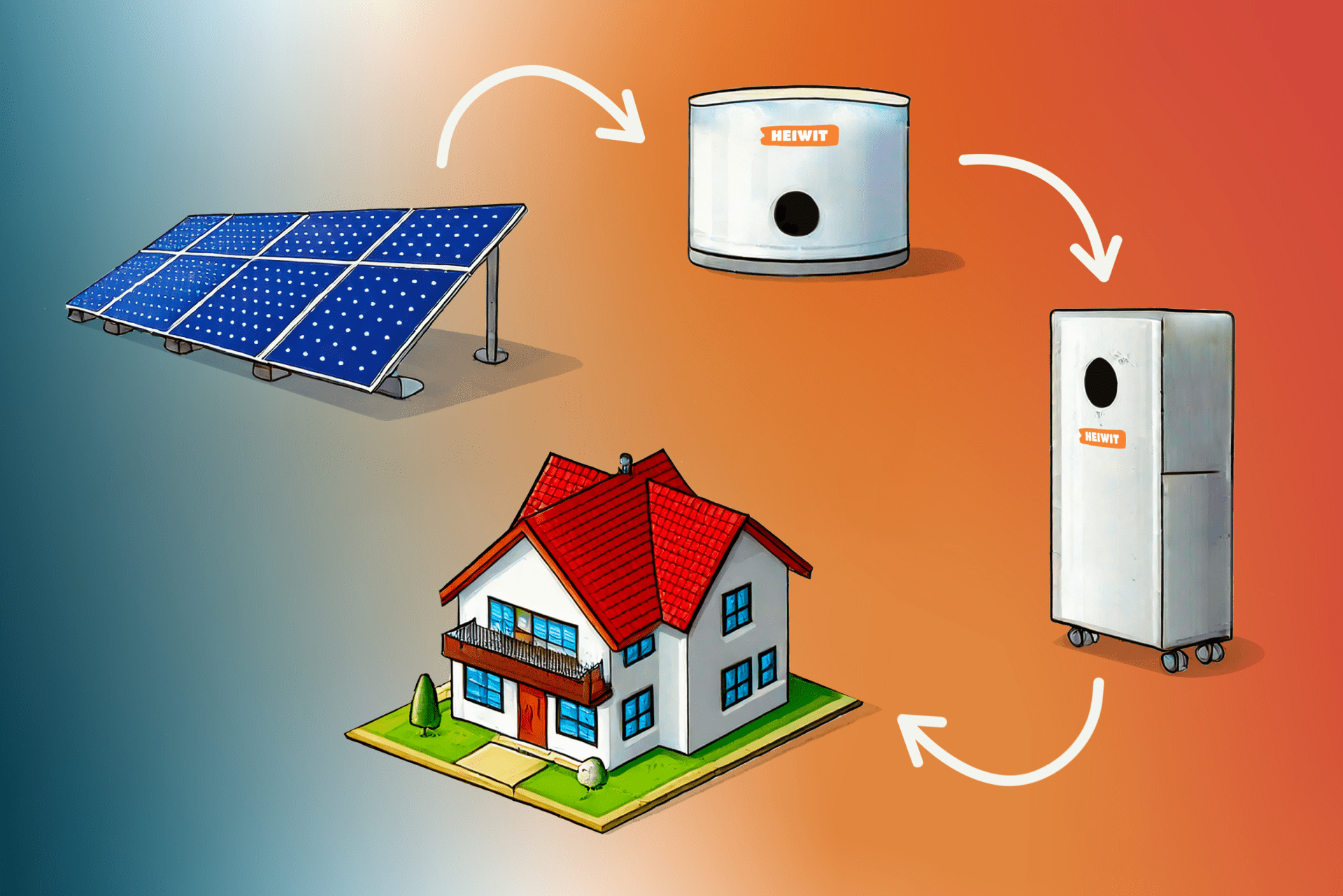
The battery is only half of the system: the other half is the’inverter. Good compatibility between battery and inverter is essential to achieve proper charge/discharge management, protection, performance and reliability over time.
If you want a general overview of the technology first, you can find the complete guide here:
Sodium ion batteries: what they are, advantages and comparison with lithium
Because compatibility really matters
- Power ManagementThe inverter decides how much power to request from the battery at any given time.
- Protectionsvoltage/current and temperature management limits must be observed.
- Communication: the correct protocols allow accurate reading of SoC and safety states.
- ReliabilityIncorrect compatibility can cause abnormal behaviour and battery stress.
What information is needed to verify compatibility
For a quick check you need this data:
- Single-phase or three-phase
- Inverter power (kW)
- Plant diagram (grid-tie, hybrid, backup, etc.).
- Battery voltage range and supported communication parameters
- Current limits and charge/discharge power
Typical configurations
1) New plant with hybrid inverter
It is the most straightforward solution: hybrid inverter + battery designed to work together. It allows optimal management and simpler configuration.
2) Existing system (retrofit)
On an existing system there are two options:
- the retrofit: keep the existing solar PV inverter and pair it with a Heiwit hybrid inverter (single-phase Virgo or three-phase Lybra) and the battery, connected on the AC line, or
- replace it with a Heiwit hybrid inverter for the best integration and complete management.
To find out which way is best in your case, read the practical guide:
Retrofit on an existing system: when it pays to kit and when to replace the inverter
Quick checklist before installation
- Single-phase/three-phase verification and available meter power
- Check that the battery parameters required by the inverter are consistent
- Set charge/discharge limits correctly
- Confirm that the BMS communicates correctly (SoC and states)
- Tests behaviour under real conditions (domestic loads and peaks)
Frequently asked questions
Can I use any inverter?
No. At present the Heiwit battery works only with Heiwit hybrid inverters: Virgo single-phase and Lybra three-phase. It is not compatible with inverters from other brands, which do not support the voltage range of sodium batteries.
What is the difference between single-phase and three-phase?
Load and power management changes. In three-phase, it is important to design the configuration correctly in order to achieve stable and consistent operation.
We help you choose the right configuration
For a quick response, send us:
- PV power (kWp)
- single-phase/three-phase
- inverter power (kW) and model (if available)
- indicative annual consumption (kWh)
? Contact us now: we will get back to you with a clear, ready-to-install configuration.
Useful links:
 Italian
  English
  German
  French
  Spanish
  Polish
  Dutch
Dutch  Romanian
  Hungarian
  Czech
Czech  Swedish
  Portuguese
  Greek
Greek