
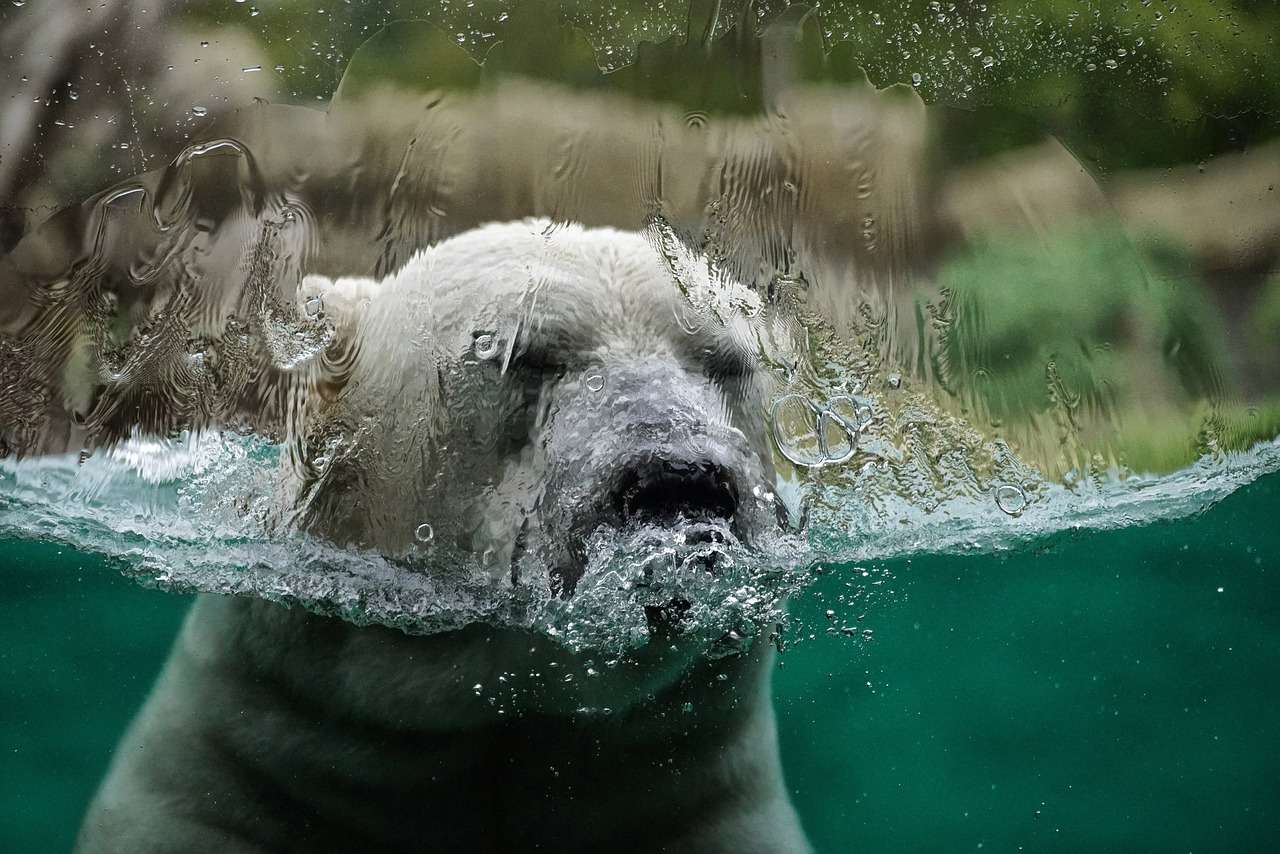
There are those who think that a worrying climate change is not taking place and those who, on the other hand, predict an endless tragedy. Where does the truth lie?
Summers are getting hotter and hotter, in some parts of the world it has not snowed for a few years. Freshwater sources such as rivers and lakes often run dry on hot days, ocean levels have risen, and when it rains, the full power of nature manifests itself, causing damage to people and buildings. In summer in Canada and the United States, worrying and untameable fires break out. Certainly, conditions on our planet are no longer the same as they were a few years ago.
But can we really talk about a climate crisis? What are its consequences and what happens if we do not stop the climate emergency as soon as possible?
Data and statistics to better understand the climate crisis
Climate change refers to long-term changes in weather patterns and average temperatures, mainly caused by human activities such as fossil fuel use and deforestation. These actions have increased the concentration of greenhouse gases, such as CO2, in the atmosphere, trapping heat and leading to an increase in the planet's temperature. The effects include species extinctions, changes in marine and terrestrial ecosystems, and extreme weather phenomena such as heat waves and storms.
The IPCC warns that Limiting the global temperature increase to 1.5°C is crucial to avoid the most severe impacts. However, current trends indicate a potential increase of up to 3.2°C by the end of the century if no significant measures are taken to reduce greenhouse gas emissions.
However, we should not think that the problem of climate change only affects the environment and the weather. Society is also at great risk: the most vulnerable populations are suffering the most severe consequences, affected by extreme weather events, with devastating consequences for their food security, health and safety. Climate-related migrations are becoming increasingly common. People are forced to leave their homelands because of droughts, floods and unsustainable environmental conditions. This creates social and political tensions, increasing the risk of conflict and instability.
Finally, the economic consequences are becoming increasingly evident. The damage caused by natural disasters and the loss of agricultural productivity are putting a strain on global economies. Companies suffer financial losses due to climate instability and supply chain disruptions.
Although many preventive measures and technologies have been implemented to combat climate change, such as the European Climate Targets for 2030 and 2050, the future does not look as promising as we would have liked. The latest research has already shown that the summer of 2023 will not be the hottest in decades. In fact, it could be the coolest we will experience in the coming years.
Why exactly 1.5 °C?
World attention is fixed on a crucial issue that resonates from the high podiums of the UN climate summit in Glasgow: 1.5 degrees Celsius. But why this number? In the end, what is one and a half degrees more globally? Will it change our lives that much?
Let us clarify: even an increase of 1°C can cause severe damage to terrestrial and marine ecosystems, with devastating effects on biodiversity, natural habitat and animal and plant species; it can lead to a rise in sea level, threatening coastal and island areas with flooding, coastal erosion and land loss; it can intensify extreme weather events, such as heat waves, storms, floods and droughts, with devastating consequences for human communities and ecosystems it can affect agricultural production and food security, with potentially serious consequences for millions of people who depend on agriculture for their livelihoods; finally, it can influence the spread of infectious diseases, increase the incidence of heat-related illnesses and air quality, and put public health at risk.
So, although it might seem like a small margin, the 1.5°C limit was set to try to minimise these impacts, as even one degree more can have significant consequences for the environment and people.
What will happen when the planet is 1.5°C warmer?
Limiting the global temperature increase to 1.5 degrees Celsius by 2100 has become the shared goal of world leaders. It is a race against time to avoid climate disasters, with all their devastating consequences. However, according to the world's current pollution patterns, According to the Climate Clock we will reach the point of no return in just five years' time. What will happen then?
Current global warming is already 1.1 degrees Celsius higher than 150 years ago, and the consequences are obvious and alarming.
Nothing will ever be the same again
On the day we will reach 1.5 °C more, coral reefs, a symbol of beauty and marine biodiversity, will almost disappear. Extreme storms, once considered rare, will become increasingly frequent and intense. Rising temperatures increase the amount of moisture in the air, fuelling torrential rains and devastating storms such as Hurricane Ida, which recently caused destruction and human casualties in the north-eastern United States.
These climate change will affect the geographical distribution of climate zones, causing alterations in ecosystems and biodiversity. Plant and animal species will be under pressure from habitat loss and pollution, and the number of pests and invasive species is expected to increase. In addition, agriculture, livestock farming and the ability of ecosystems to provide vital services and goods may be compromised.
More frequent and severe droughts will have significant consequences for agriculture, water supply and biodiversity, with a economic impact estimated in billions of euros per year. Coastal regions will be particularly affected by rising sea levels, while heat waves and changes in the distribution of diseases could affect human health.
Businesses will be subject to significant threats, with impacts on infrastructure, energy, agriculture, tourism and insurance. Building infrastructure could be damaged by extreme weather events, while the energy sector will face challenges related to energy production and distribution in the context of climate change. Agriculture and forestry will suffer losses due to more frequent droughts and fires, while the insurance sector will have to manage increasing risks related to climate change damage. The tourism sector will also suffer negative impacts due to extreme weather conditions and changes in natural ecosystems.
Different geographical areas will be affected in different ways. For example, the Arctic will experience rapid ice melt, while coastal regions will face challenges related to sea level rise. Cities and urban areas will face infrastructure problems and adaptation to climate change, while mountain areas will experience changes in species distribution and ecosystems.
People are in danger
On a social level, climate change will pose a threat to health, especially for the most vulnerable population groups such as the elderly and children. This could also affect employment, education and training, with long-term consequences for economic growth and social development.
The most vulnerable populations suffer the most severe consequences. Poor and marginalised communities are the most affected by extreme weather events, with devastating consequences for their food security, health and safety.
Climate migrations are becoming increasingly common (it is even estimated that some peninsulas and islands may disappear altogether or become uninhabitable due to too much water). People are forced to leave their homelands because of droughts, floods and unsustainable environmental conditions. This creates social and political tensions, increasing the risk of conflict and instability.
The time to fight the climate crisis is now
In conclusion, the 2024 climate crisis requires urgent action. It is crucial to act now to mitigate the devastating effects of climate change. A transition to renewable energy is essential to reduce emissions and slow down global warming.
Heiwit is committed to leading this transition. By installing solar panels on company and private roofs, we are committed to promoting energy sustainability and being part of the solution to the climate crisis. Each of us has a role to play in the fight against climate change, and together we can make a difference for a safer and more sustainable future.
 Italian
  English
  German
  French
  Spanish
  Polish
  Dutch
Dutch  Romanian
  Hungarian
  Czech
Czech  Swedish
  Portuguese
  Greek
Greek