
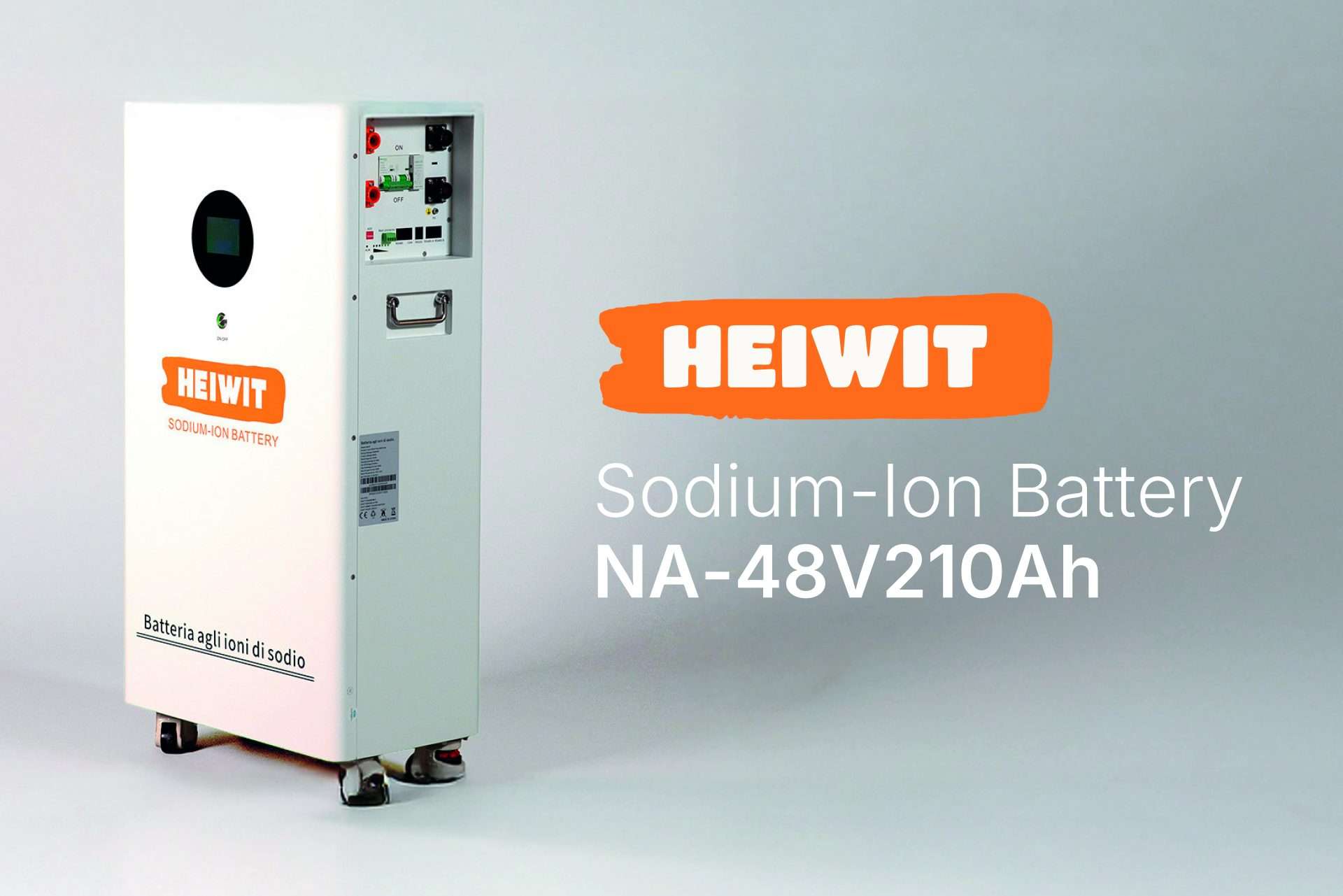
Tutti i modelli, con capacita e configurazioni a confronto, sono raccolti nella gamma di batterie agli ioni di sodio.
HEIWIT sodium ion battery: features, models and applications
La batteria HEIWIT agli ioni di sodio è progettata per l’stationary accumulation in abbinamento a impianti fotovoltaici e sistemi domestici. In questa pagina trovi una panoramica chiara delle caratteristiche, cosa include il sistema e come scegliere la configurazione più adatta.
If you want to understand the technology in a general way first, you can start here:
Sodium ion batteries: a complete guide
What it is used for (in practice)
- Aumentare l’autoconsumo dell’energia prodotta dal fotovoltaico
- Reducing withdrawal from the grid
- Managing peak demand
What the system includes
- Moduli batteria con capacità variabile
- Integrated BMS (management and protection)
- Cablaggi e connessioni per un’installazione sicura
- Complete technical documentation
Key features
- Chemistry: Sodium-ion
- Capacità nominale modulo: variable value depending on the chosen configuration
- Usable energy: dipende dalle condizioni d’uso
- Charging/discharging power: integrazione funzione dell’inverter
- Operating temperature range: designed for stationary use
Come scegliere la capacità giusta
Per dimensionare correttamente l’accumulo conta soprattutto quanta energia utilizzi nei periodi in cui il fotovoltaico non produce (sera/notte) e quanta energia in eccesso hai di giorno.
- High evening consumption → più kWh di batteria
- Large PV system → più energia disponibile da accumulare
- Maximum self-consumption target → accumulo più generoso
Compatibilità inverter
La compatibilità con l’inverter è fondamentale per prestazioni ottimali e gestione corretta di potenza e protezioni. Per saperne di più:
Discover compatible inverters and ideal configurations
Installation on existing system (retrofit)
Spesso si può integrare l’accumulo su impianti già installati, ma dipende dalla configurazione (inverter, monofase/trifase e requisiti di connessione rete). Per capire quale soluzione è più adatta:
Retrofit on existing photovoltaic systems: a practical guide
Request a customised proposal
Indicate us:
- photovoltaic power (kWp)
- single-phase or three-phase
- annual consumption (kWh)
- inverter model (if available)
? Contact us now: we will get back to you with a concrete solution tailored to your system.
 Italian
  English
  German
  French
  Spanish
  Polish
  Dutch
Dutch  Romanian
  Hungarian
  Czech
Czech  Swedish
  Portuguese
  Greek
Greek