

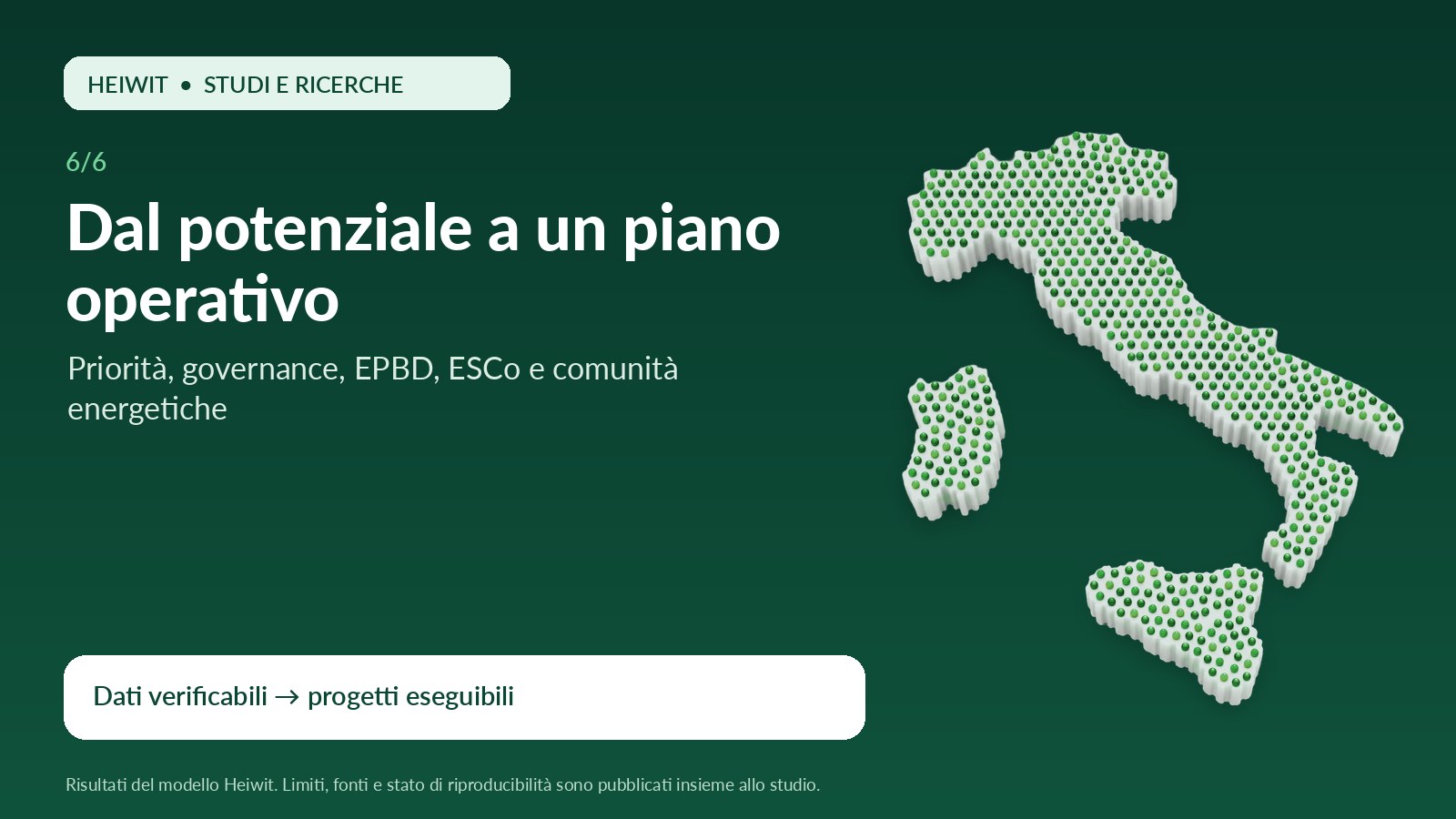
The decisive step is not estimating how many panels fit on roofs, but transforming thousands of surfaces into an orderly pipeline of bankable, permittable, and executable projects.
The chapter in 8 slides
Scroll through the original carousel created for this chapter. The images have been optimised for the web and uploaded to the WordPress Media Library.

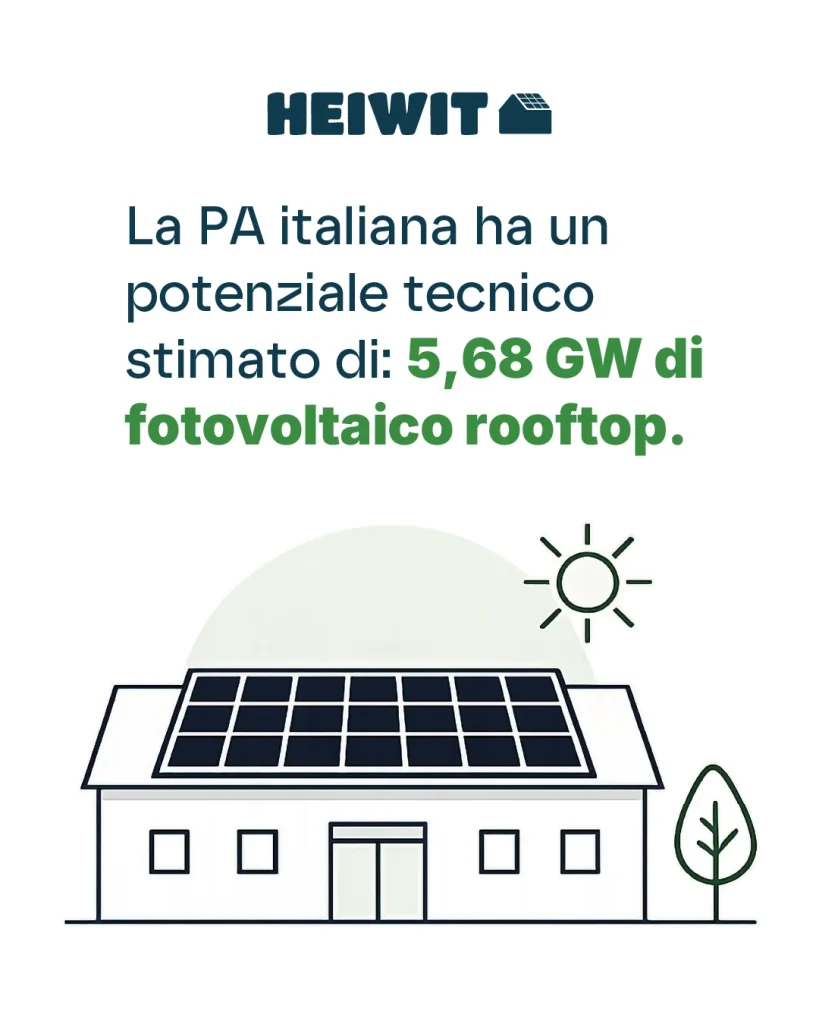
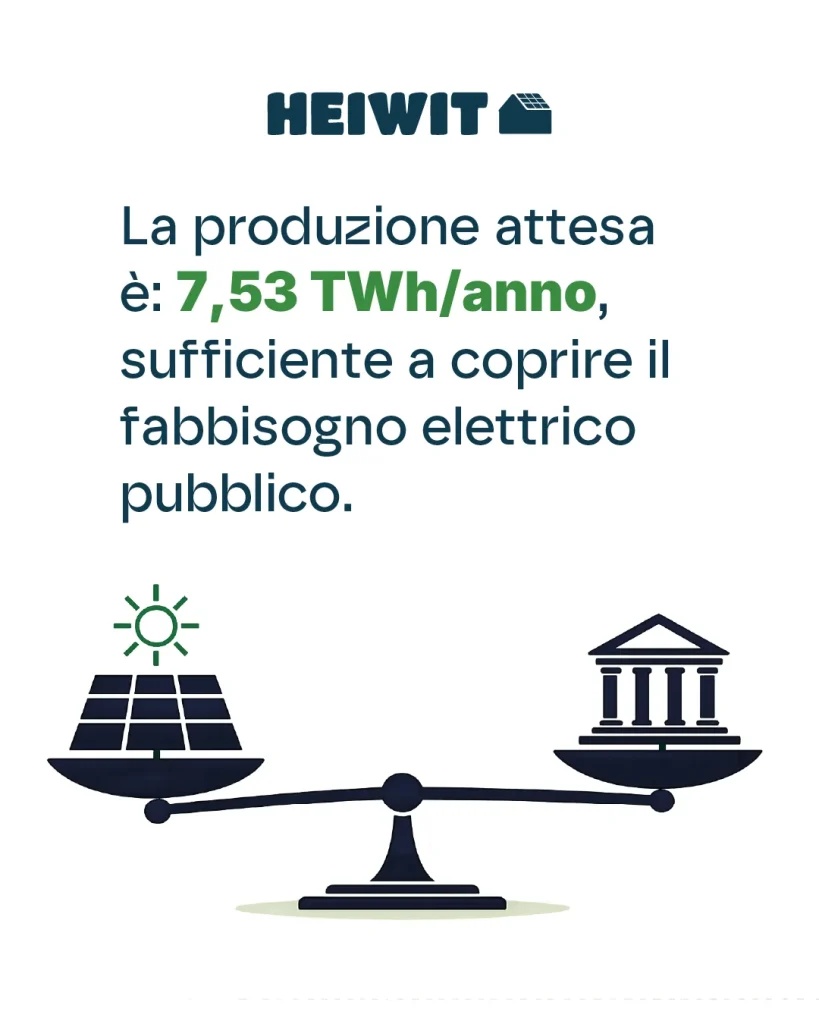
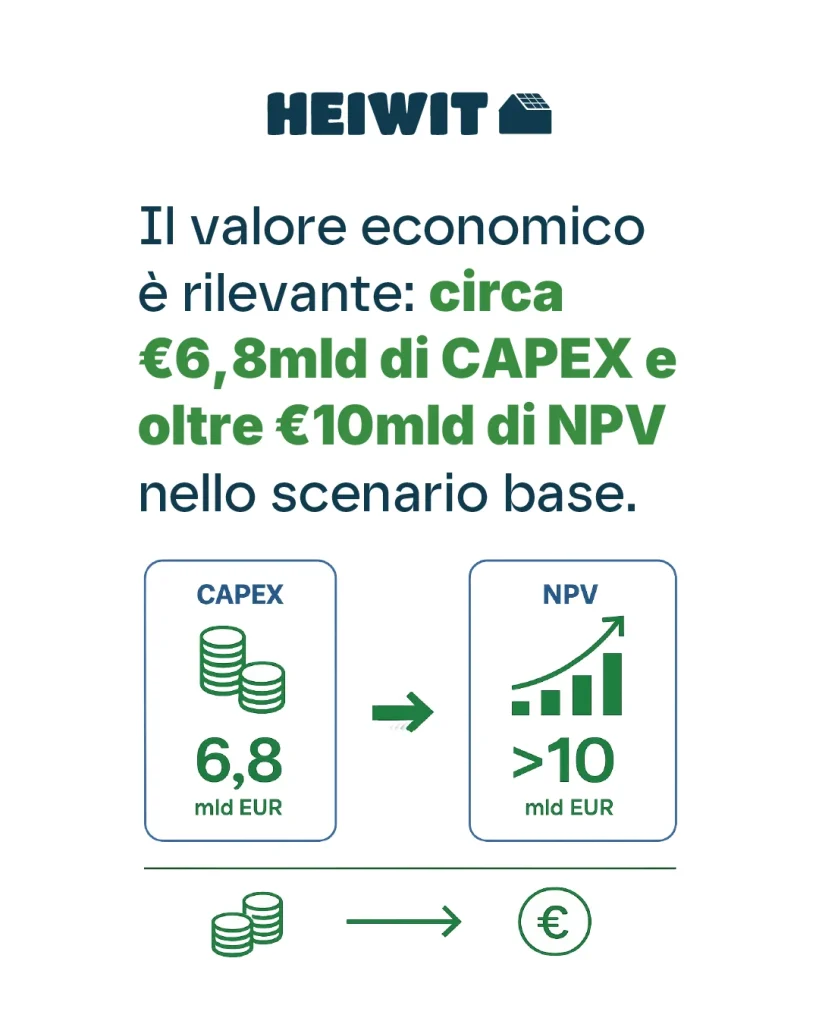
On your smartphone swipe sideways. From the keyboard use the left and right arrows.
The European context
Directive (EU) 2024/1275, Article 10, introduces progressive requirements for suitable solar energy installations, where technically, economically and functionally feasible and in accordance with national transposition. For existing public buildings, it sets thresholds of over 2,000 m² by 31 December 2027, 750 m² by 2028 and 250 m² by 2030.
It is incorrect to summarise the rule as an absolute obligation on every public building over 250 m². Feasibility and transposition are essential parts of the provision.
A six-stage roadmap
- Verified personal details: to integrate OSM with institutional sources, property details, property identifiers and connection points.
- Technical pre-screening: roof, structure, restrictions, fire safety, shadows, access points and state of repair.
- Energy data: hourly consumption, power draw, tariffs, service continuity and sharing options.
- Prioritisation: Rank the buildings according to feasibility, self-consumption, unit cost, environmental impact and speed of planning approval.
- Implementation model: direct purchase, ESCO, concession, partnership, energy community or combinations permitted under the legislation.
- Implementation and monitoring: standard specifications, regional lots, KPIs, remote monitoring, maintenance and publication of results.
Which buildings should we tackle first?
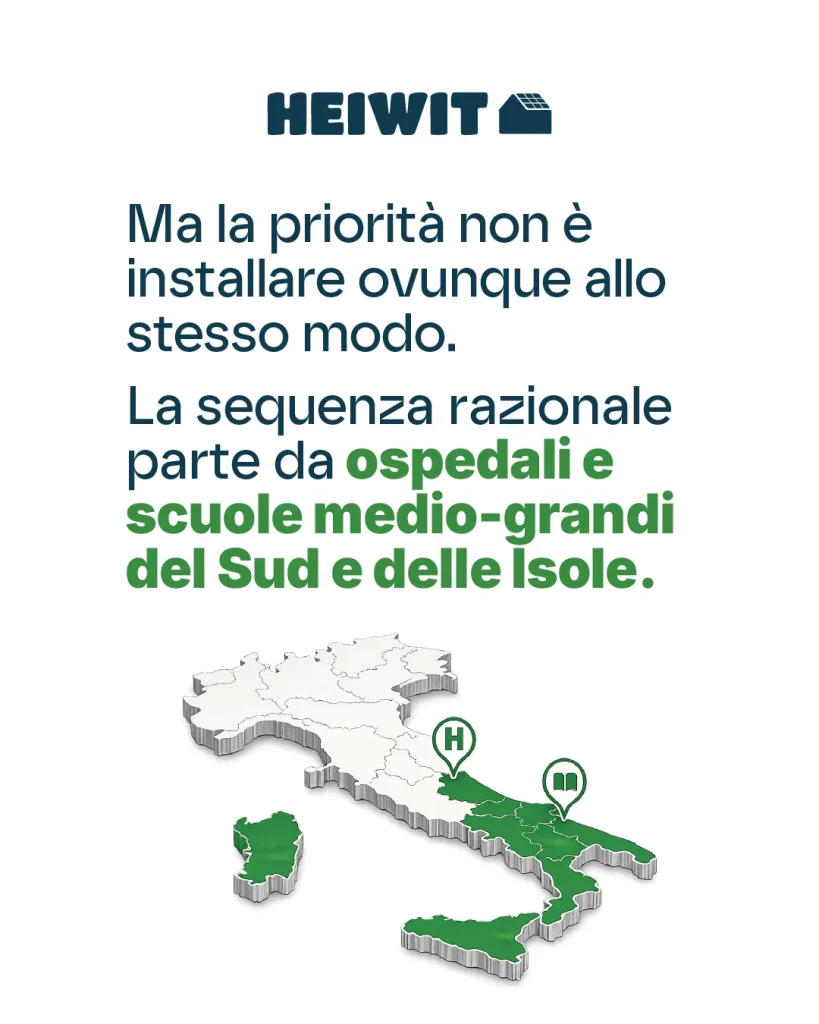
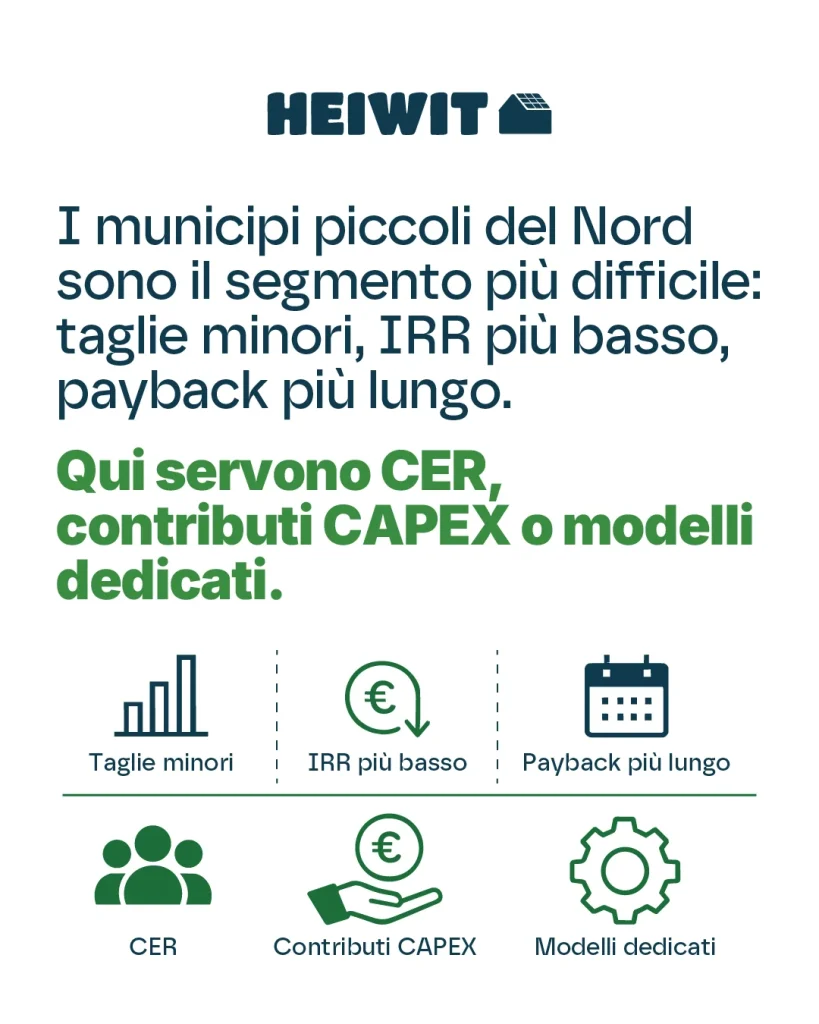
The preliminary model identifies medium-to-large hospitals and schools in the South and on the islands as potential priority clusters, given their size and potential for generating revenue. This recommendation remains a working hypothesis until the internal rate of return (IRR) and payback period have been verified. In practice, a large roof is not a priority if it has structural constraints, difficult access or incompatible energy consumption patterns.
Governance and consolidation
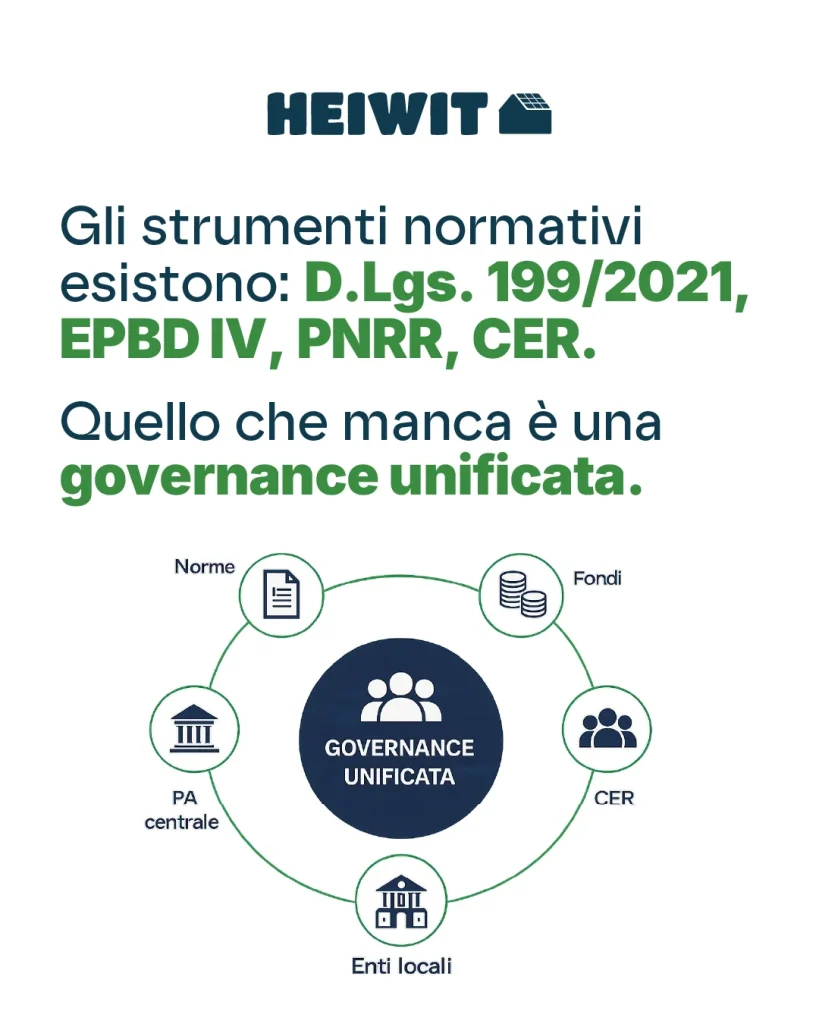
Administrative fragmentation can be reduced through central or regional support structures: a shared register, tender templates, standard contracts, technical assistance and the grouping of lots. Larger buildings can support independent projects; smaller ones can be grouped together to reduce transaction costs.
ESCos and energy communities
The ESCo model can transfer part of the investment and risk to a private entity, but requires clear contracts covering energy savings, ownership, maintenance and duration. Energy communities can make the most of shared energy within the local area, but they do not replace an analysis of the connection point and the applicable regulations.
The final outcome of the study
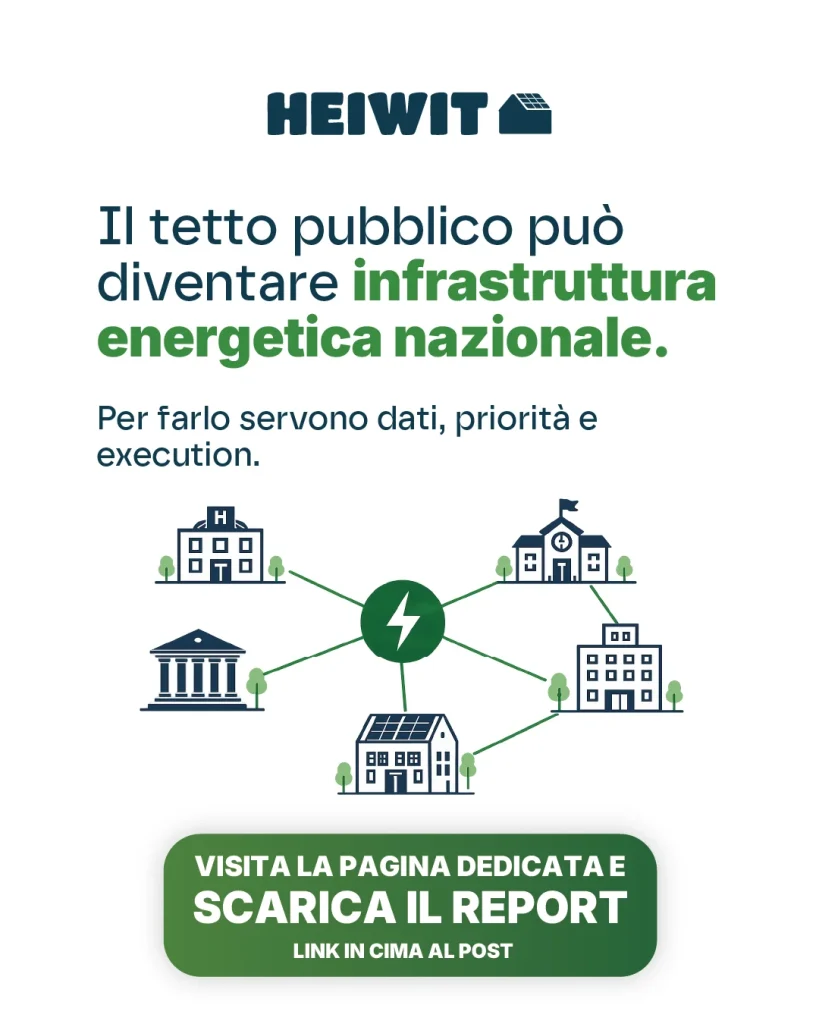
The next stage should not simply be a longer report. It should produce a versioned database with verification status, a ranking of buildings, clear criteria, publishable aggregated datasets, a register of sources and an update plan. This is how editorial research becomes decision-making infrastructure.
Conclusion
The potential is there, but public value stems from execution. Making errors and missing data visible is the first step towards building a credible and citable pipeline.
 Italian
  English
  German
  French
  Spanish
  Polish
  Dutch
Dutch  Romanian
  Hungarian
  Czech
Czech  Swedish
  Portuguese
  Greek
Greek