
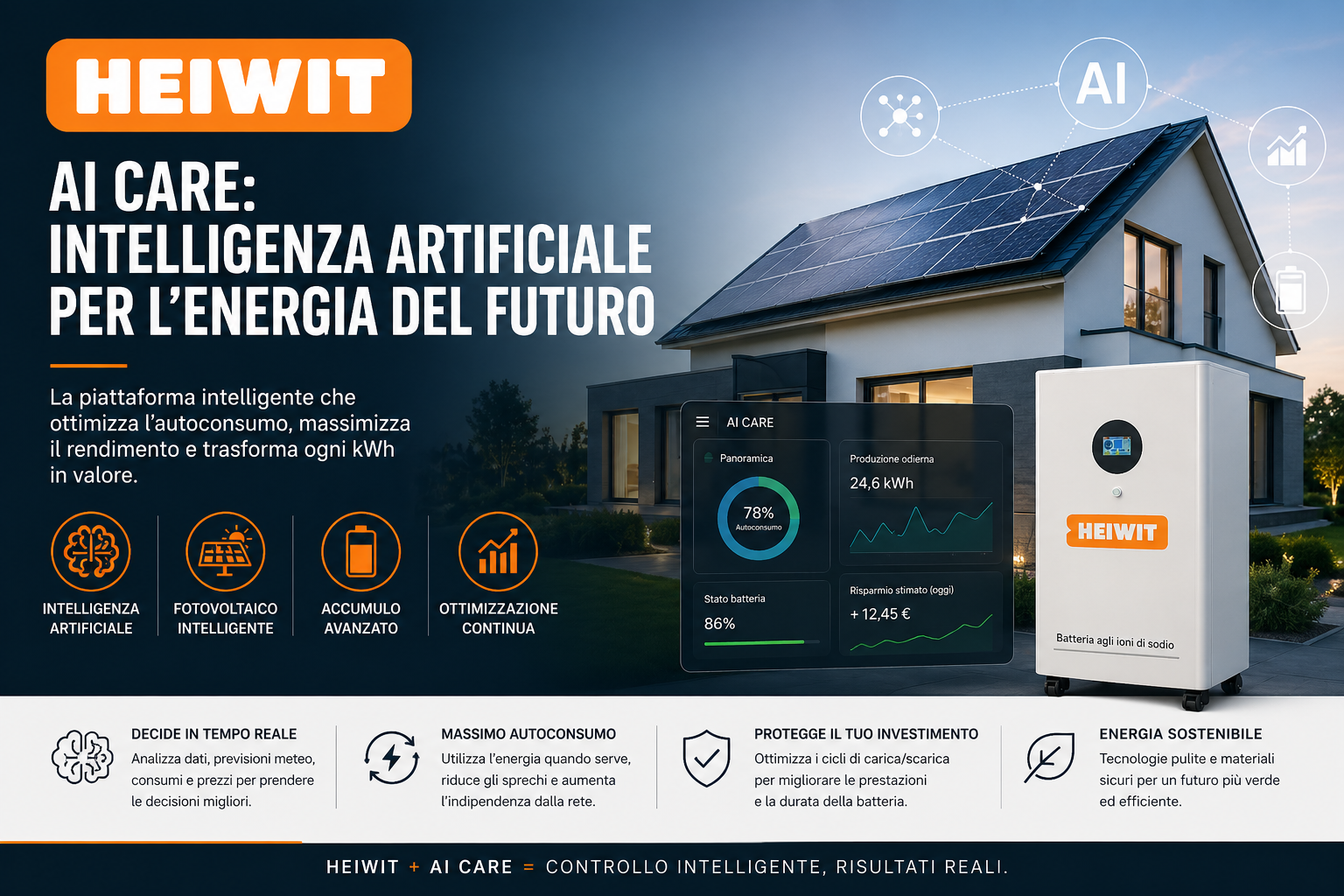
Intelligenza Artificiale e Fotovoltaico: come AI CARE ottimizza l’autoconsumo energetico
Negli ultimi anni, l’integrazione tra photovoltaic systems e sistemi di accumulo ha trasformato il modo in cui produciamo e utilizziamo energia. Tuttavia, il vero salto di qualità avviene con l’introduzione dell’Artificial intelligence applied to energy management.
In this context, it arises AI CARE, il software sviluppato da HEIWIT per ottimizzare in modo dinamico l’utilizzo dell’energia prodotta da impianti fotovoltaici con batterie agli ioni di sodio.
Cos’è l’ottimizzazione dell’autoconsumo
For self-consumption si intende la quota di energia prodotta da un impianto fotovoltaico che viene utilizzata direttamente dall’utente, senza essere immessa nella rete elettrica.
In a traditional system:
- L’energia viene consumata quando disponibile (tipicamente di giorno)
- L’energia in eccesso viene immessa in rete
- L’energia necessaria quando il sole non produce viene acquistata dalla rete
Questo modello è inefficiente, perché non tiene conto dei momenti ottimali di utilizzo e valorizzazione dell’energia.
Il ruolo dell’intelligenza artificiale nel fotovoltaico
L’Artificial intelligence (AI) consente di superare questo limite introducendo una gestione predittiva e adattiva dell’energia.
AI CARE uses advanced algorithms to analyse and correlate different factors:
- Projected photovoltaic production (based on weather data)
- Consumi energetici dell’utente Historical patterns
- Prezzi dell’energia (e.g. hourly PUN trend)
- Battery status State of Charge
Il risultato è un sistema in grado di prendere decisioni autonome su:
- When Charge the battery
- When to download it
- When selling energy to the grid
- When ridurre al minimo l’acquisto
Energy optimisation: from passive system to active system
Un impianto fotovoltaico tradizionale può essere definito un sistema passiveit produces energy but does not decide how to use it.
With AI CARE, the system becomes Active:
- It forecasts future production
- Anticipate consumption
- Optimise energy flows in real time
Questo approccio è noto come Intelligent energy management e rappresenta una delle evoluzioni più rilevanti nel settore delle energie rinnovabili.
Key terminology (explained simply)
- SOC (State of Charge): Battery charge level expressed as a percentage
- National Single Price: prezzo dell’energia elettrica sul mercato all’ingrosso, variabile ogni ora
- Self-consumption energy produced and used directly
- Network entry Unused energy that is sold
- Peak shaving Reducing peak consumption through battery usage
I vantaggi concreti dell’AI applicata al fotovoltaico
L’integrazione di AI CARE porta benefici misurabili:
- Aumento dell’autoconsumo
- Riduzione dell’energia acquistata dalla rete
- Migliore valorizzazione dell’energia prodotta
- Battery charge/discharge cycle optimisation
In particolare, l’ottimizzazione dei cicli consente anche di preserve the useful life of the battery, a fundamental aspect in storage systems.
Perché le batterie agli ioni di sodio sono ideali per l’AI
HEIWIT batteries sodium ions present features that integrate perfectly with intelligent control systems:
- Elevata stabilità termica
- Absence of critical materials such as cobalt
- Good tolerance to frequent cycles
- Stable performance even at low temperatures
Queste proprietà permettono all’AI di operare con maggiore flessibilità, senza i limiti tipici di alcune tecnologie al litio.
Conclusion
L’adozione dell’Artificial intelligence in photovoltaics rappresenta un passaggio chiave verso sistemi energetici più efficienti, sostenibili e autonomi.
AI CARE demonstrates how it's possible to transform a plant from a simple energy generator into Intelligent system capable of optimising every kWh produced.
In un contesto in cui il costo dell’energia e la gestione delle risorse diventano sempre più centrali, l’evoluzione verso soluzioni di AI-based energy management non è più un’opzione, ma una direzione inevitabile.
L’ottimizzazione dei consumi rende al massimo quando c’è energia da spostare nel tempo, cioè con un sistema di accumulo collegato all’impianto.
 Italian
  English
  German
  French
  Spanish
  Polish
  Dutch
Dutch  Romanian
  Hungarian
  Czech
Czech  Swedish
  Portuguese
  Greek
Greek