
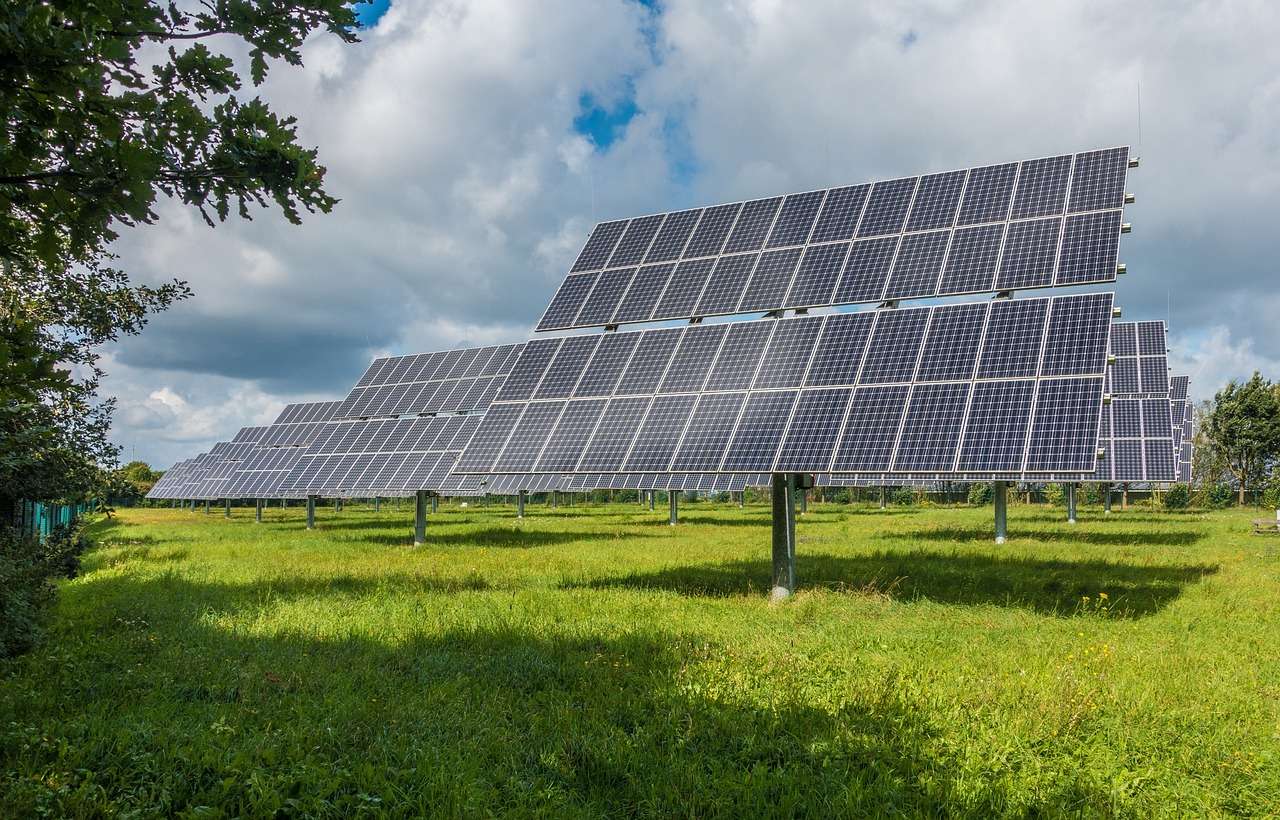
At Heiwit, we know solar panels well. We install photovoltaic systems on company roofs, enabling us to make our contribution to the decarbonisation and to provide Italian companies with a way to make a profit. Who knows better than us what a solar panel looks like and how it works?
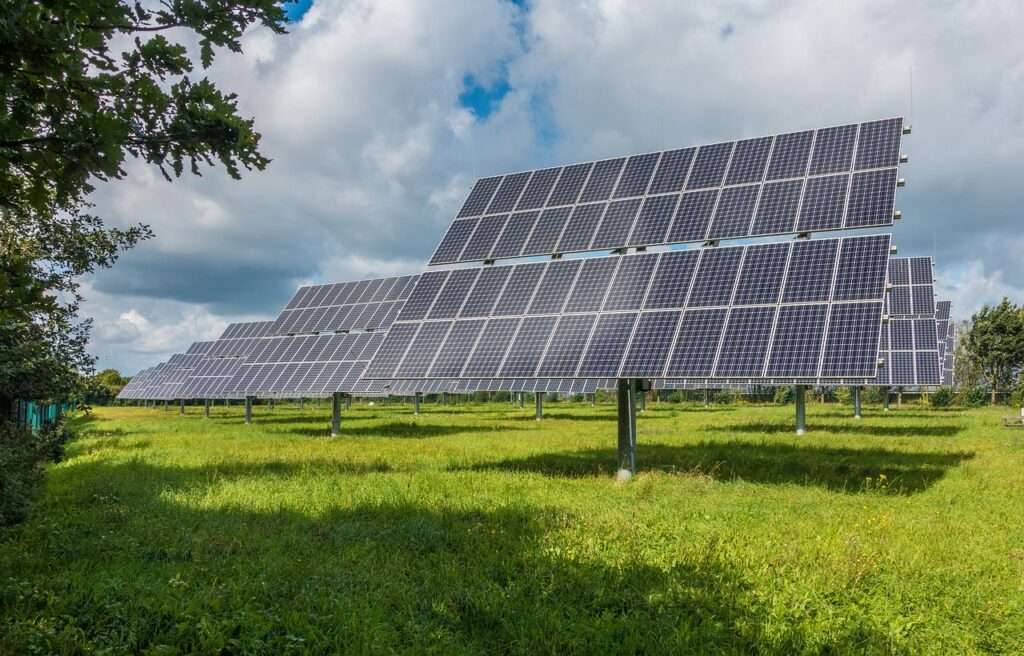
What does a solar panel look like?
In technical jargon, we call solar panels photovoltaic modules.
These are technological devices designed to convert the sun's light energy into usable electrical energy. To do this, their basic structure is composed of several essential components that work synergistically to capture and transform sunlight into electricity.
The main component of a solar panel is the photovoltaic cell, usually made of crystalline silicon. Photovoltaic cells are thin layers of semiconductor material that generate electric current when exposed to sunlight. These cells are electrically connected in series or in parallel within the panel to obtain the desired voltage and current.
The support frame of solar panels is typically made of aluminium or stainless steel to ensure mechanical strength and durability. This frame supports the photovoltaic cells and also provides a protective structure for the panel.
Above the photovoltaic cells is applied a transparent weather-resistant glass. This glass serves to protect them from moisture, dust and mechanical damage, as well as allowing sunlight to pass through unhindered. A film of transparent, anti-reflective material can be applied to the upper surface of the glass to improve the efficiency of sunlight collection, reducing surface reflections that might otherwise reduce the energy captured by the photovoltaic cells.
A sheet of waterproof and insulating material is attached to the back of the photovoltaic cells, which protects the cells from moisture and weather penetration from the other side of the panel. Finally, cables and electrical connectors are connected to the photovoltaic cells to transport the electricity produced by the solar panel to a storage system or a distribution and end-use system.
How a solar panel works
Now that you know what a solar panel looks like and what types exist (in fact, we have dedicated an article to this topic) it is time to understand how a photovoltaic system works.
History of solar energy
Before we get into that, you should know that the discovery of the power of sunlight to create energy is not recent. In the 7th century BC, people used sunlight to light fires by reflecting the sun's rays off shiny objects. The Greeks and Romans in the 3rd century BC used solar mirrors to light torches during religious ceremonies.
Then, in 1839, the young French physicist Edmond Becquerel, aged just 19, discovered the photovoltaic effect while experimenting with a cell consisting of metal electrodes in a conducting solution. He noticed that the cell produced more electricity when exposed to sunlight: it was the first photovoltaic cell! Photovoltaic technology made great strides in 1954, when Daryl Chapin, Calvin Fuller and Gerald Pearson developed the first solar cell capable of absorbing and converting enough solar energy to run our daily equipment.
Since then, technologies have evolved to meet the growing demand for energy. How does a solar panel work today?
Modern solar panels
A solar panel works through a process known as the photovoltaic effect, which takes place within the photovoltaic cells we presented earlier. When sunlight strikes a photovoltaic cell, the photons contained in the light transmit energy to the electrons in the cell's semiconductor material, usually crystalline silicon.
This process excites the electrons, forcing them to move within the semiconductor material. Due to the specific structure of the cell, the excited electrons are forced to move in a specific direction, generating an electrical potential difference between the two sides of the cell. This potential difference creates a direct electric current (DC) that can be collected and utilised. Electrical cables and connectors connected to the photovoltaic cells transport this electric current out of the solar panel, where it can be directed to a storage system or used directly to power electrical devices.
This direct current is then converted into alternating current (AC) by an inverter, making it compatible with domestic and industrial electrical appliances.
Even in cloudy conditions, it is possible to generate solar energy, although the amount of energy produced may vary depending on the amount and quality of sunlight available, as well as the size, number and location of the solar panels.
Do solar thermal panels also exist?
If you are interested in renewables and committed to trying to ensure a greener future, you have probably also heard of thermal solar panels, which are different from photovoltaic panels. Solar thermal panels generate heat directly from sunlight to heat water or other fluids.
They consist of a series of thin tubes, commonly made of copper or aluminium, which are arranged on a flat surface and covered with a tough clear glass.
The operation of solar thermal panels is quite simple: when sunlight hits the tubes below, they absorb the heat and transfer it to the water or fluid contained within. This fluid heats up and is then pumped through a system of pipes to a storage tank or distribution system for heating buildings, swimming pools or for domestic hot water.
Solar thermal panels are an efficient and sustainable solution to harness solar energy for thermal purposes, reducing dependence on fossil fuels and contributing to the reduction of greenhouse gas emissions.
Conclusions
Solar energy is a clean and sustainable source that harnesses the sun's energy to generate usable electricity and heat. Despite modest growth in 2023, forecasts for 2024 are promising, with an estimated increase of around 50 terawatt hours (TWh) due to the rapid installation of large solar PV capacities. 2023 saw a record increase in solar PV capacity, with over 14 GWDC installed, mainly on rooftops, and a similar trend is expected in 2024. This energy boom, combined with more stable nuclear production, points to a marked decrease in the use of fossil fuels and a more European 2030 climate targets.
The growth of renewable energy seems to be able to meet Europe's energy demand, reducing dependence on non-renewable sources and contributing to decarbonisation goals. With innovative solutions such as those proposed by Heiwit, which offers economic incentives to companies for the’installation of photovoltaic systems on roofs, we are witnessing a transformation towards a more sustainable and green energy future. Do you want to be part of the transition? Then don't hesitate to contact us.
 Italian
  English
  German
  French
  Spanish
  Polish
  Dutch
Dutch  Romanian
  Hungarian
  Czech
Czech  Swedish
  Portuguese
  Greek
Greek