
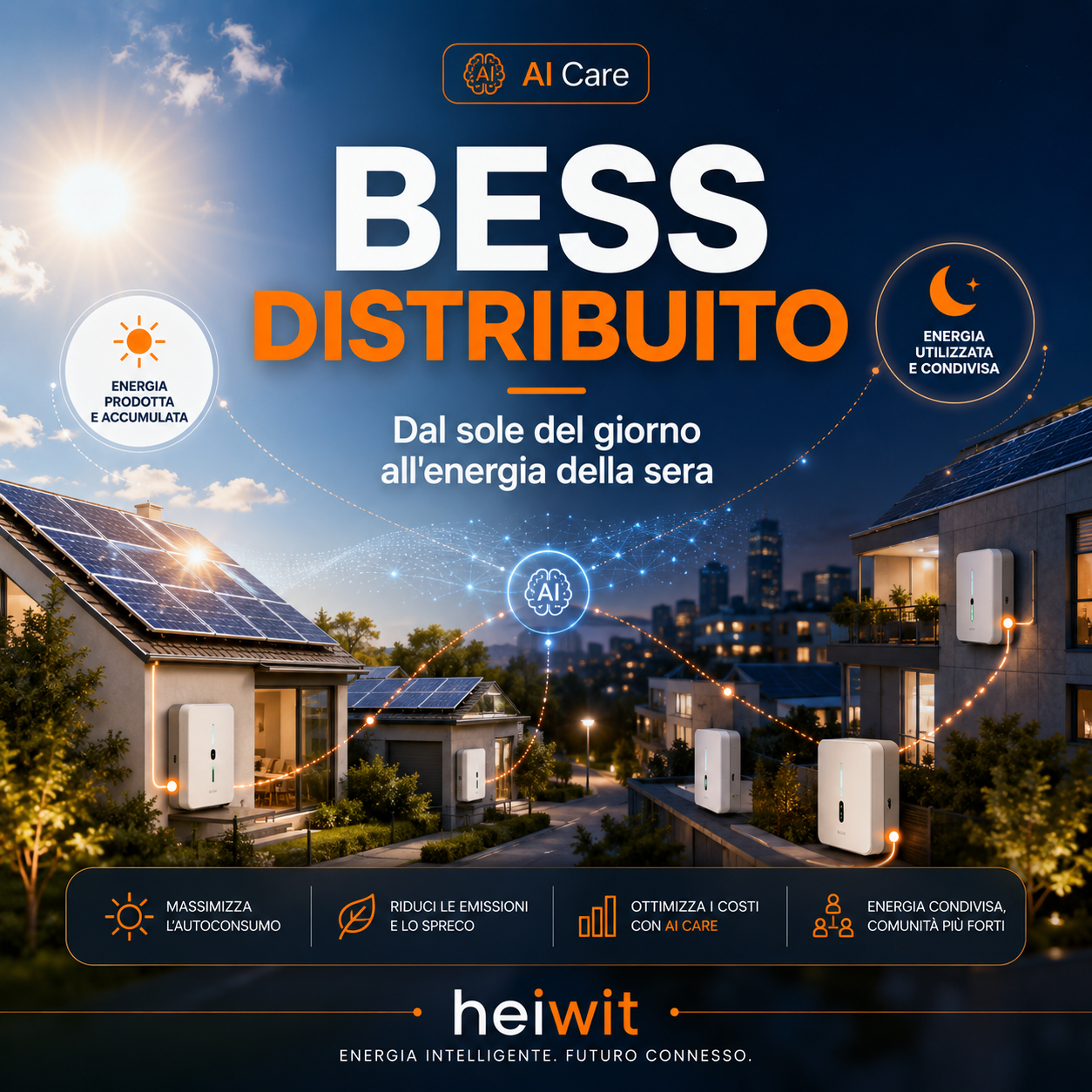
BESS distribuito: il sole di giorno può diventare energia utile la sera
Per anni abbiamo immaginato il fotovoltaico in modo semplice: il sole splende, i pannelli producono energia, la casa o l’azienda la utilizza e ciò che avanza viene immesso in rete.
È stato un cambiamento enorme. Milioni di famiglie e imprese hanno smesso di essere soltanto consumatori e sono diventate anche produttrici di energia pulita.
Oggi però siamo davanti a un passaggio ancora più importante.
Non basta più produrre energia rinnovabile. Dobbiamo imparare a usarla, conservarla e renderla disponibile nel momento in cui serve davvero.
Il sole produce soprattutto nelle ore centrali della giornata. Ma i consumi più elevati, soprattutto nelle abitazioni, arrivano spesso la sera: quando rientriamo a casa, accendiamo luci, cucina, climatizzazione, pompe di calore, elettrodomestici e ricarichiamo l’auto elettrica.
È qui che entra in gioco il concetto di BESS distributed.
Non una sola grande batteria lontana dalle persone. Ma migliaia di batterie installate in case, aziende, condomini, negozi e capannoni, capaci di accumulare energia quando è abbondante e renderla disponibile più tardi, quando può essere davvero utile.
Il paradosso dell’energia solare
Solar power has an extraordinary characteristic: it produces clean, local, and silent energy.
Ma ha anche una sfida naturale: produce quando c’è il sole, non necessariamente quando la domanda di energia è più elevata.
A mezzogiorno migliaia di impianti producono contemporaneamente. In molte giornate soleggiate, specialmente nei mesi primaverili ed estivi, una grande quantità di energia viene immessa nelle stesse ore.
La sera accade l’opposto.
La produzione fotovoltaica scende fino quasi a zero, mentre i consumi aumentano. La rete deve allora fornire più energia proprio nel momento in cui il sole non può più contribuire direttamente.
Per molto tempo questo è stato considerato inevitabile.
Oggi non lo è più.
Con un sistema di accumulo, l’energia prodotta durante il giorno può essere conservata e utilizzata la sera. Con una gestione intelligente, può essere programmata, protetta, ottimizzata e resa disponibile nel momento più utile.
Il sole non deve più fermarsi al tramonto.
Che cos’è un BESS distribuito
BESS stands for Battery Energy Storage System, cioè sistema di accumulo a batteria.
Un BESS tradizionale può essere un grande impianto centralizzato: container di batterie collegati alla rete, a un parco fotovoltaico o a un sito industriale.
A BESS distributed It follows a different logic.
È composto da tante batterie più piccole, installate vicino ai luoghi in cui l’energia viene prodotta e consumata: abitazioni, condomini, aziende, negozi, scuole, magazzini, centri commerciali e capannoni industriali.
Ogni batteria lavora prima di tutto per il proprio utilizzatore. Ma, quando è collegata a una piattaforma intelligente, può contribuire anche a una visione più ampia dell’energia.
Una singola batteria accumula energia. Migliaia di batterie coordinate costruiscono flessibilità per un intero territorio.
Questo è il cuore del BESS distribuito: trasformare tanti piccoli sistemi indipendenti in una grande risorsa energetica diffusa.
Dall’energia in eccesso alla disponibilità serale
Una delle funzioni più interessanti di AI Care è proprio la possibilità di gestire l’energia in eccesso prodotta durante il giorno, evitando che venga necessariamente immessa subito in rete.
Quando la produzione fotovoltaica è elevata e i consumi locali sono bassi, il sistema può valutare se trattenere una parte dell’energia in batteria.
Quell’energia può poi essere utilizzata nelle ore serali per aumentare l’autoconsumo, ridurre il prelievo dalla rete, alimentare una pompa di calore, sostenere la ricarica di un’auto elettrica o rendere disponibile energia quando la domanda è maggiore.
In alcune configurazioni e nei servizi energetici abilitati, questa stessa logica può permettere di spostare la valorizzazione dell’energia dalle ore centrali della giornata alle ore serali.
La logica non è più soltanto: “produco e vendo subito”.
Become “produco ora, ma decido con intelligenza quando utilizzare o valorizzare questa energia”.
This profoundly changes the role of photovoltaics.
L’impianto non è più soltanto un generatore di energia. Diventa una risorsa capace di adattarsi ai consumi, alle condizioni della rete e alle esigenze del singolo utente.
AI Care: the battery that doesn't wait, but decides
Una batteria tradizionale segue spesso regole semplici: si carica quando c’è produzione e si scarica quando manca il sole.
AI Care introduce una logica più evoluta.
The battery must not only charge and discharge. It must understand the energy context in which it is working.
Quanto produrrà il fotovoltaico nelle prossime ore? Quali saranno i consumi della casa o dell’azienda? Quanta energia conviene tenere in riserva? Quando è più utile aumentare l’autoconsumo? Quando può essere opportuno ridurre l’immissione nelle ore di forte produzione locale?
AI Care is born to transform these data into decisions.
Not rigid management, the same every day.
But a system capable of adapting to production, consumption, forecasts, and energy habits.
In una giornata molto soleggiata, la batteria può prepararsi ad assorbire energia in eccesso. In una giornata con poca produzione prevista, può adottare una strategia più prudente. In presenza di consumi serali elevati, può preservare una quota di energia per le ore successive.
È questo il passaggio da un semplice accumulo a un accumulo intelligente.
A new infrastructure, built building by building
Per decenni la rete elettrica è stata progettata attorno a poche grandi centrali che producevano energia per milioni di utenti.
Today the model is changing.
Roofs generate energy. Companies generate energy. Apartment buildings generate energy. Car parks, warehouses, canopies and industrial buildings generate energy.
Il sistema elettrico è diventato distribuito.
It now also needs to become intelligent.
Il BESS distribuito può aiutare proprio in questo percorso. Non sostituisce le grandi batterie industriali, le linee elettriche, i trasformatori o le cabine di rete. Ma può affiancarli, rendendo l’intero sistema più flessibile.
Quando molte batterie sono presenti nello stesso territorio, possono assorbire parte dell’energia in eccesso nelle ore centrali della giornata. Possono ridurre il prelievo nelle ore serali. Possono aiutare a distribuire meglio l’energia nel tempo.
È una nuova forma di infrastruttura.
Not built with just cement, copper and steel.
But also with batteries, software, data, algorithms, and distributed intelligence.
Dall’autonomia individuale alla forza collettiva
Installare un impianto fotovoltaico con accumulo è prima di tutto una scelta di autonomia.
Significa utilizzare di più l’energia prodotta sul proprio tetto. Significa ridurre la dipendenza dall’energia acquistata dalla rete. Significa rendere la propria abitazione o azienda più efficiente.
However, distributed BESS adds a new dimension.
Ogni batteria continua a lavorare per il proprio proprietario, ma può diventare parte di un sistema più grande. Un sistema in cui migliaia di utenti contribuiscono, ognuno con la propria capacità di accumulo, a rendere l’energia più stabile e più disponibile nei momenti giusti.
La vera transizione energetica non dipenderà soltanto da quanti pannelli installeremo.
Dipenderà dalla nostra capacità di coordinare produzione, consumo, accumulo e rete.
Dipenderà dalla capacità di spostare l’energia nel tempo.
Dipenderà da quanto sapremo rendere intelligente ciò che oggi è semplicemente elettrico.
The role of sodium-ion batteries
To build a distributed BESS, storage technologies are needed that are designed to work daily, close to people and close to buildings.
Sodium-ion batteries represent a particularly interesting technology for stationary storage. They don't have to chase the extreme lightness required by smartphones or high-performance vehicles.
They have to do something equally important.
They have to work every day.
They must accumulate clean energy.
They must help families and businesses use it better.
Devono diventare una parte concreta dell’infrastruttura energetica del futuro.
È questa la direzione che Heiwit vuole contribuire a costruire.
Il sole del giorno, l’energia della sera
For a long time, the sun had a limit: only producing when it shone.
Oggi, grazie all’accumulo e a sistemi intelligenti come AI Care, quel limite può essere superato.
L’energia prodotta a mezzogiorno può contribuire ai consumi delle otto di sera.
Può aiutare una famiglia quando torna a casa.
Può supportare un’azienda dopo la fine della produzione fotovoltaica.
Può ridurre i prelievi dalla rete nelle ore più delicate.
Può diventare parte di una nuova infrastruttura energetica, più vicina alle persone e più adatta al mondo delle rinnovabili.
Questo è il BESS distribuito.
Not one single large battery far from everyone.
But thousands of smart, connected and coordinated batteries.
An energy grid capable of storing today's sunshine and making it available in the evening, when it's truly needed.
Con AI Care, l’energia non viene soltanto prodotta.
It is understood, safeguarded, and used at the right time.
Note: le modalità di accumulo, autoconsumo, immissione, vendita e valorizzazione dell’energia dipendono dalla configurazione dell’impianto, dai servizi disponibili, dalle condizioni tecniche di rete e dai contratti applicabili.
Il salto fra le ore centrali di sole e i consumi serali si copre con la capacità installata: nel BESS distribuito Heiwit il mattone di base è il modulo da 10 kWh a 48 V, stackable fino a tre unità per inverter.
 Italian
  English
  German
  French
  Spanish
  Polish
  Dutch
Dutch  Romanian
  Hungarian
  Czech
Czech  Swedish
  Portuguese
  Greek
Greek