
Il fotovoltaico non produce sempre quando l’energia vale di più. Per questo, in un mercato in cui il prezzo cambia ora per ora, la vera differenza non è solo produrre energia: è decidere quando usarla, quando accumularla e quando cederla.
Energy Manager AI è il cuore decisionale di AI Care. Non si limita a mostrare dati, ma interpreta produzione, consumi, stato della batteria, previsioni meteo e andamento del prezzo zonale orario. L’obiettivo è far lavorare l’impianto in modo più intelligente, evitando logiche statiche e valorizzando meglio l’energia disponibile.
In un impianto tradizionale, l’inverter segue regole fisse: se c’è produzione e la batteria può caricarsi, carica; se c’è energia in eccesso, la immette in rete; se manca energia, preleva. Questa logica è semplice e funziona, ma non tiene conto del fatto che ogni ora ha un valore diverso. Il prezzo dell’energia può essere basso, alto o in alcuni momenti anche molto sfavorevole. Senza una strategia, parte dell’energia viene ceduta “a caso”.
Perché un impianto da solo rende meno
Un impianto fotovoltaico non gestito in modo intelligente rischia di cedere energia nelle ore meno convenienti e di non avere batteria disponibile nei momenti in cui servirebbe di più. Il problema non è la qualità dell’impianto, ma la mancanza di una regia dinamica. Se il sistema ignora il prezzo dell’energia e non usa previsioni, si limita a reagire a ciò che accade in quel momento.
AI Care introduce una logica diversa: anticipare. La piattaforma guarda la giornata, valuta produzione prevista, consumi e prezzo orario, poi definisce una strategia. Quando il prezzo è basso, può essere più utile accumulare o aumentare l’autoconsumo. Quando il prezzo sale, l’energia immessa ha più valore. Questo non significa trasformare l’impianto domestico in uno strumento speculativo, ma semplicemente evitare che l’energia venga gestita senza criterio.
Sell at the price peaks, accumulate when it's advantageous
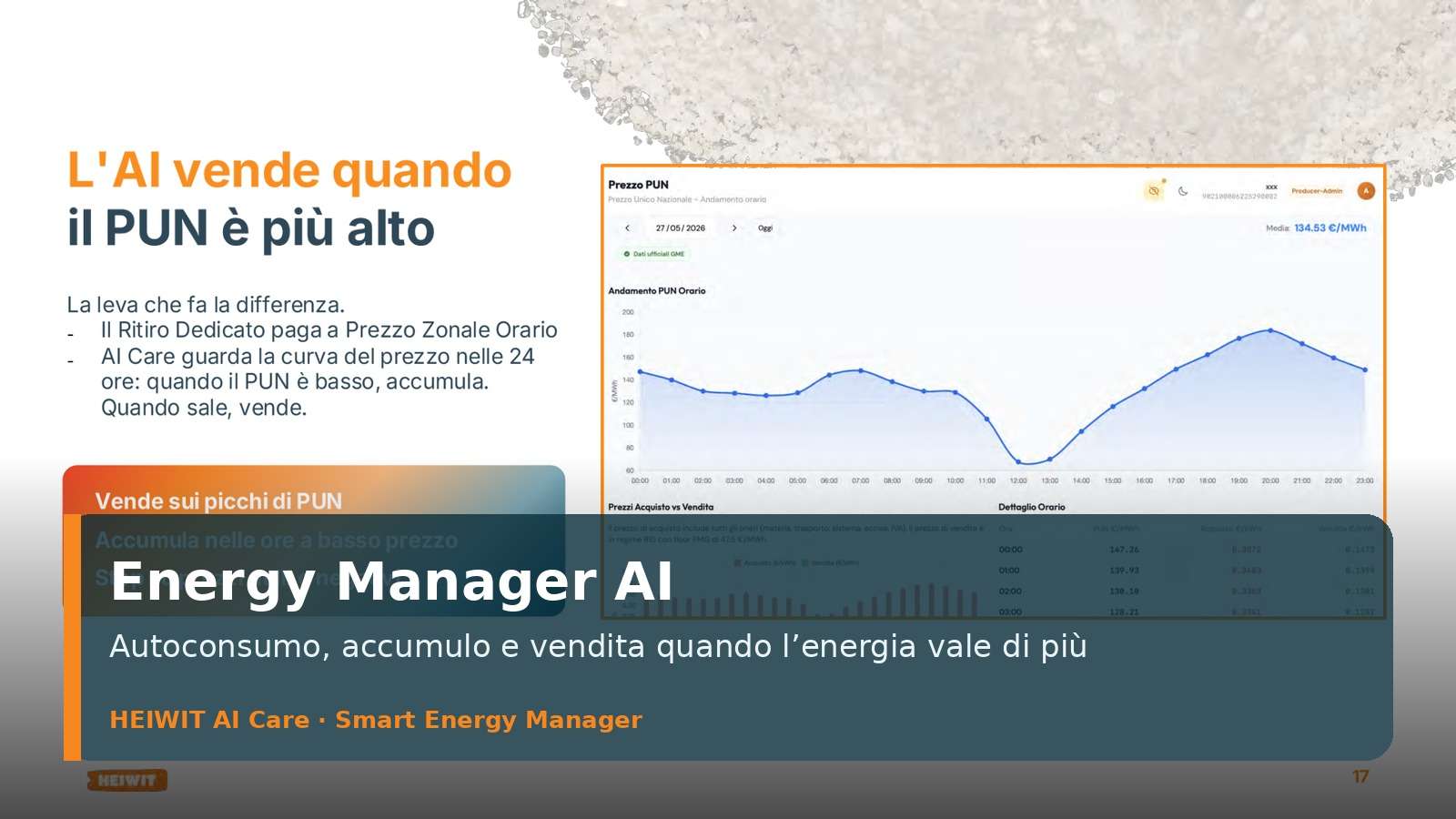
Il principio è chiaro: vendere l’energia quando vale di più e non sprecarla quando vale poco. Nel Ritiro Dedicato il valore dell’energia immessa è legato alla logica del prezzo zonale orario. Questo rende molto più importante il momento in cui l’energia viene ceduta. Una batteria, se governata correttamente, può diventare lo strumento che sposta l’energia nel tempo.
Energy Manager AI analizza la curva del prezzo nelle 24 ore. Se il prezzo è troppo basso, il sistema può scegliere di non cedere immediatamente. Se è previsto un picco più avanti, può trattenere energia in batteria per valorizzarla meglio o per coprire i consumi serali. La batteria non viene quindi usata solo come “serbatoio”, ma come componente attivo di una strategia energetica.
Stop at prices too low or negative
Uno dei casi più evidenti riguarda le ore in cui il valore dell’energia immessa è molto basso o non conveniente. In questi scenari, cedere automaticamente in rete può ridurre il beneficio complessivo dell’impianto. AI Care introduce soglie e logiche decisionali per evitare che l’energia venga svenduta.
Questo approccio è particolarmente importante in un sistema elettrico sempre più variabile. La crescita del fotovoltaico porta molta produzione nelle ore centrali della giornata; di conseguenza, il valore dell’energia può ridursi proprio quando gli impianti producono di più. Senza accumulo intelligente, l’impianto segue il flusso naturale della produzione. Con Energy Manager AI, invece, l’accumulo diventa una leva di flessibilità.
24-hour decision: anticipate, don't react
La piattaforma lavora su una previsione mobile a 24 ore. Questo significa che non aspetta semplicemente che la batteria si carichi o si scarichi, ma valuta in anticipo cosa potrà accadere nelle ore successive. Se nel pomeriggio è previsto un calo di produzione ma la sera i consumi aumentano, può mantenere una quota di carica. Se invece è previsto un prezzo più favorevole, può prepararsi a cedere energia in modo più efficace.
Questa è la differenza tra automazione e intelligenza. Un’automazione esegue una regola fissa. Un sistema intelligente confronta variabili diverse e sceglie la migliore azione disponibile in quel momento. Produzione prevista, storico dei consumi, stato della batteria, condizioni meteo e prezzo dell’energia diventano parte dello stesso ragionamento.
Autoconsumo più efficace
L’obiettivo principale rimane sempre ridurre il prelievo dalla rete e aumentare l’uso dell’energia prodotta localmente. L’autoconsumo è il primo beneficio del fotovoltaico con accumulo. Ma anche l’autoconsumo può essere gestito meglio se la batteria non lavora su una soglia fissa, ma su una previsione.
Un esempio semplice: se domani è prevista una giornata molto nuvolosa, può essere utile preservare una parte della carica disponibile. Se invece è prevista alta produzione nelle ore successive, la batteria può essere gestita in modo diverso. L’intelligenza non sostituisce l’impianto: lo fa lavorare meglio rispetto alle condizioni reali.
Vantaggi per chi ha l’impianto
Per il proprietario, Energy Manager AI significa più controllo e più tranquillità. L’energia immessa viene gestita con una logica più evoluta, l’autoconsumo può migliorare e lo stato dell’impianto rimane visibile da app. Il sistema non promette miracoli, ma aggiunge una regia che negli impianti tradizionali spesso manca.
La gestione intelligente è particolarmente utile perché il cliente non vuole occuparsi ogni giorno di prezzi, grafici e strategie di carica. Vuole che l’impianto lavori bene anche quando non ci pensa. Il messaggio di AI Care è proprio questo: gestire l’energia anche quando l’utente non c’è.
Benefits for those who install
Per gli installatori, Energy Manager AI diventa un argomento di vendita forte. Non si propone solo una batteria, ma un impianto gestito dall’intelligenza artificiale. Questo crea una differenza percepibile rispetto a soluzioni standard e apre la porta a una relazione continuativa con il cliente.
La flotta sotto controllo, le anomalie rilevate in anticipo e la possibilità di offrire assistenza programmata permettono all’installatore di trasformare la vendita in un servizio. In un mercato in cui molti impianti sembrano simili sulla carta, la capacità di gestirli nel tempo può diventare il vero elemento distintivo.
Conclusion
Energy Manager AI rappresenta l’evoluzione naturale del fotovoltaico con accumulo. La batteria non deve limitarsi a caricarsi e scaricarsi: deve essere governata in base a produzione, consumi, prezzo dell’energia e obiettivi dell’utente. Questo è il passaggio da impianto passivo a impianto intelligente.
Con AI Care, Heiwit porta questa logica dentro un ecosistema integrato: monitoraggio, previsione, decisione e controllo. È una direzione chiara per il mercato: il valore del fotovoltaico non sarà solo nei kWh prodotti, ma nella capacità di usarli nel momento giusto.
Per chi installa sistemi Heiwit, significa proporre non solo tecnologia, ma una gestione energetica più evoluta e continua nel tempo.
Perché una logica di gestione come quella di Energy Manager AI possa spostare energia dalle ore economiche a quelle di valore, serve un accumulo che regga cicli frequenti: è il terreno delle batterie agli ioni di sodio della gamma Heiwit.
 Italian
  English
  German
  French
  Spanish
  Polish
  Dutch
Dutch  Romanian
  Hungarian
  Czech
Czech  Swedish
  Portuguese
  Greek
Greek