
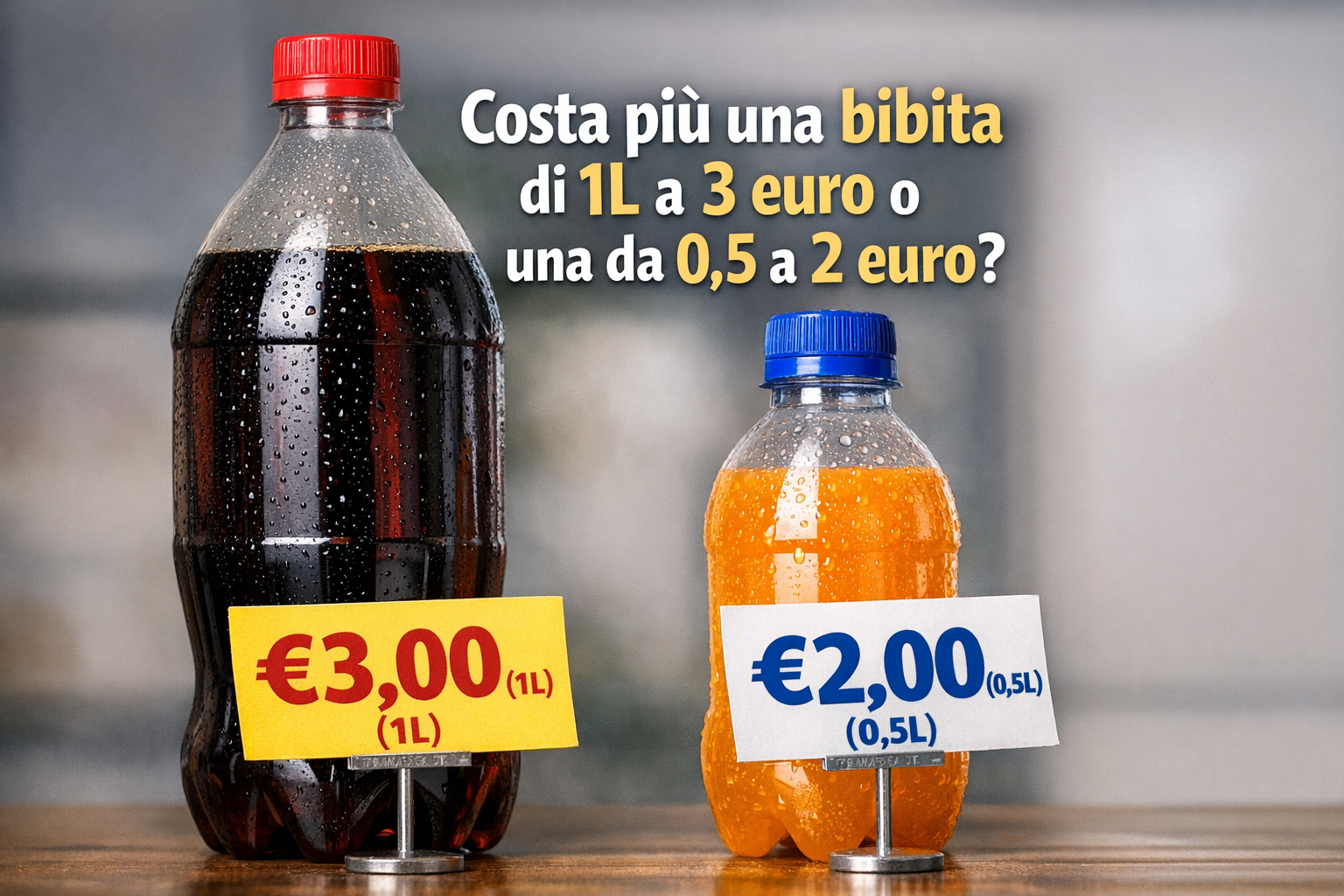
Costa di più una bibita da 1L a 3 euro o una da 0,5L a 2 euro?
La risposta sembra banale. Eppure è esattamente l’errore che fanno in tanti quando commentano il prezzo di una batteria.
Just look at the initial price, without asking quanta energia quella batteria restituirà davvero nel tempo, è come confrontare due bibite guardando solo il cartellino e ignorando quanti litri ci sono dentro.
Una costa 3 euro, l’altra 2 euro. Ma quale conviene davvero? Quella che ti dà più contenuto per ogni euro speso.
Con le batterie il principio è lo stesso. Solo che al posto dei litri bisogna guardare l’energia utile che la batteria ti darà negli anni.
The price alone says almost nothing
Due batterie possono avere entrambe scritto “10 kWh” sulla brochure, ma questo non significa affatto che abbiano lo stesso valore.
To understand whether a battery is expensive or cheap, it's not enough to ask yourself:
- “Quanto costa?”
One must ask oneself:
- Quanta energia riuscirà a erogare davvero nella sua vita?
- Per quanti anni lo farà?
- With what efficiency?
- What are the real-world performance figures, even in difficult conditions?
- With what guarantee and what support?
Ed è qui che entra in gioco il parametro più serio di tutti: the LCOS.
Che cos’è il LCOS, spiegato semplice
LCOS means Levelised Cost of Storage. In simple terms: How much does each useful kWh that the battery returns to you over its lifetime really cost you.
È il modo più corretto per confrontare due sistemi di accumulo. Non il prezzo in assoluto. Non la sensazione. Non il commento veloce sotto un post.
Se una batteria costa meno all’inizio ma dura meno, rende meno, lavora peggio in certe condizioni o ti restituisce meno energia utile, potrebbe essere in realtà più costosa.
Esattamente come una bibita piccola che sembra economica solo perché ha un prezzo più basso sul cartellino.
Perché il confronto corretto si fa sull’energia utile nel tempo
When we talk about accumulation, there are some technical terms that make a difference. We explain them very simply.
Cycles
A cycle è un giro completo di utilizzo della batteria: si carica e poi si scarica.
If a battery does 6,500 cycles, significa che può ripetere questo processo migliaia di volte nel corso della sua vita. Più cicli vuol dire, in generale, più energia erogata nel tempo.
DoD
Ministry of Defence means Depth of Discharge, cioè profondità di scarica.
Detto semplice: indica quanta parte della capacità della batteria puoi usare realmente. Un DoD del 91% significa che puoi sfruttare una quota molto alta dell’energia accumulata.
Questo è importante perché una batteria non vale per quello che promette sulla carta, ma per quanto di quell’energia puoi usare davvero.
3) Efficiency
L’efficiency indicate how much energy enters and how much actually gets out.
Con un’efficienza del 95%, la gran parte dell’energia caricata viene restituita all’impianto e alla casa. Più l’efficienza è alta, meno energia si perde lungo il percorso.
4) Derating
The Derating è la riduzione delle prestazioni in certe condizioni operative.
Some batteries, when they are near their charge or discharge limits, or when operating in less favourable conditions, non riescono più a dare la stessa potenza.
Per l’utente significa una cosa molto concreta: sulla carta sembra tutto perfetto, ma nella realtà l’energia disponibile e la spinta della batteria possono calare proprio quando servono di più.
Il punto non è “quanto costa”. Il punto è “quanto vale”
If we take as a reference a battery that offers:
- 6,500 cycles
- DoD 91%
- efficiency 95%
- 10-year Italian warranty
- reliable performance even at low temperatures
- Absence of derating at charge extremes
allora il confronto serio non può essere fatto guardando solo il prezzo di listino.
Va fatto chiedendosi quanta energia utile quella batteria erogherà negli anni, con quale continuità, con quale affidabilità e con quale qualità del supporto post-vendita.
Una batteria che lavora quando altre si fermano vale di più
Questo è un punto spesso ignorato.
Not all batteries behave the same way when temperatures drop. Not all maintain consistent performance when approaching charge extremes. Not all always manage to guarantee truly available power.
If a battery continues to supply energy in conditions where other technologies perform worse or are limited, then we are not talking about a technical detail for a brochure.
We are talking about real value.
Perché una batteria serve proprio nei momenti in cui deve rispondere bene: quando hai bisogno di energia, quando l’impianto deve essere stabile, quando vuoi continuità e non sorprese.
La garanzia non è un dettaglio burocratico
Also the 10-year Italian warranty non è un semplice numero da mettere in fondo alla scheda tecnica.
Per il cliente significa sapere che dietro al prodotto c’è una struttura che risponde, un riferimento chiaro, un interlocutore vicino e regole di copertura definite.
When we talk about accumulation, it's not just about buying an object. It's also about buying affidabilità nel tempo.
Let's make a simple argument.
Imagine two batteries:
- The first costs less, but has fewer cycles, less usable energy, and degrades performance in some conditions.;
- la seconda costa di più, ma restituisce molta più energia utile durante la sua vita, con prestazioni più stabili e una garanzia solida.
Qual è davvero la più economica?
Quella con il prezzo iniziale più basso?
Or that which, at the end of the day, it costs you less per kWh actually delivered?
Ecco perché il LCOS è il parametro corretto. Perché toglie dal tavolo le impressioni e riporta tutto su una base concreta.
The price alone becomes a misleading piece of information.
When considering:
- the useful life of the battery,
- l’energia realmente sfruttabile,
- l’efficienza,
- la stabilità delle prestazioni,
- behaviour at low temperatures,
- l’assenza di derating agli estremi di carica,
- The 10-year Italian warranty,
then the price taken in isolation ceases to be the main criterion.
Become an isolated number, often misused.
Il vero tema è un altro: How much useful energy will you take home for every euro spent.
Next time, let's ask the right question.
Quindi sì, torniamo alla provocazione iniziale.
Costa di più una bibita da 1L a 3 euro o una da 0,5L a 2 euro?
It depends on how much drink you're buying for each euro spent.
Con le batterie è identico. Solo che invece dei litri devi guardare i kWh over time.
Per questo confrontare due batterie solo sul prezzo è un errore.
Il confronto serio si fa sul LCOS. Tutto il resto è rumore.
Il confronto con il litio non si gioca solo sul prezzo di acquisto: ne parliamo nella pagina Salt batteries e nella gamma.
 Italian
  English
  German
  French
  Spanish
  Polish
  Dutch
Dutch  Romanian
  Hungarian
  Czech
Czech  Swedish
  Portuguese
  Greek
Greek