
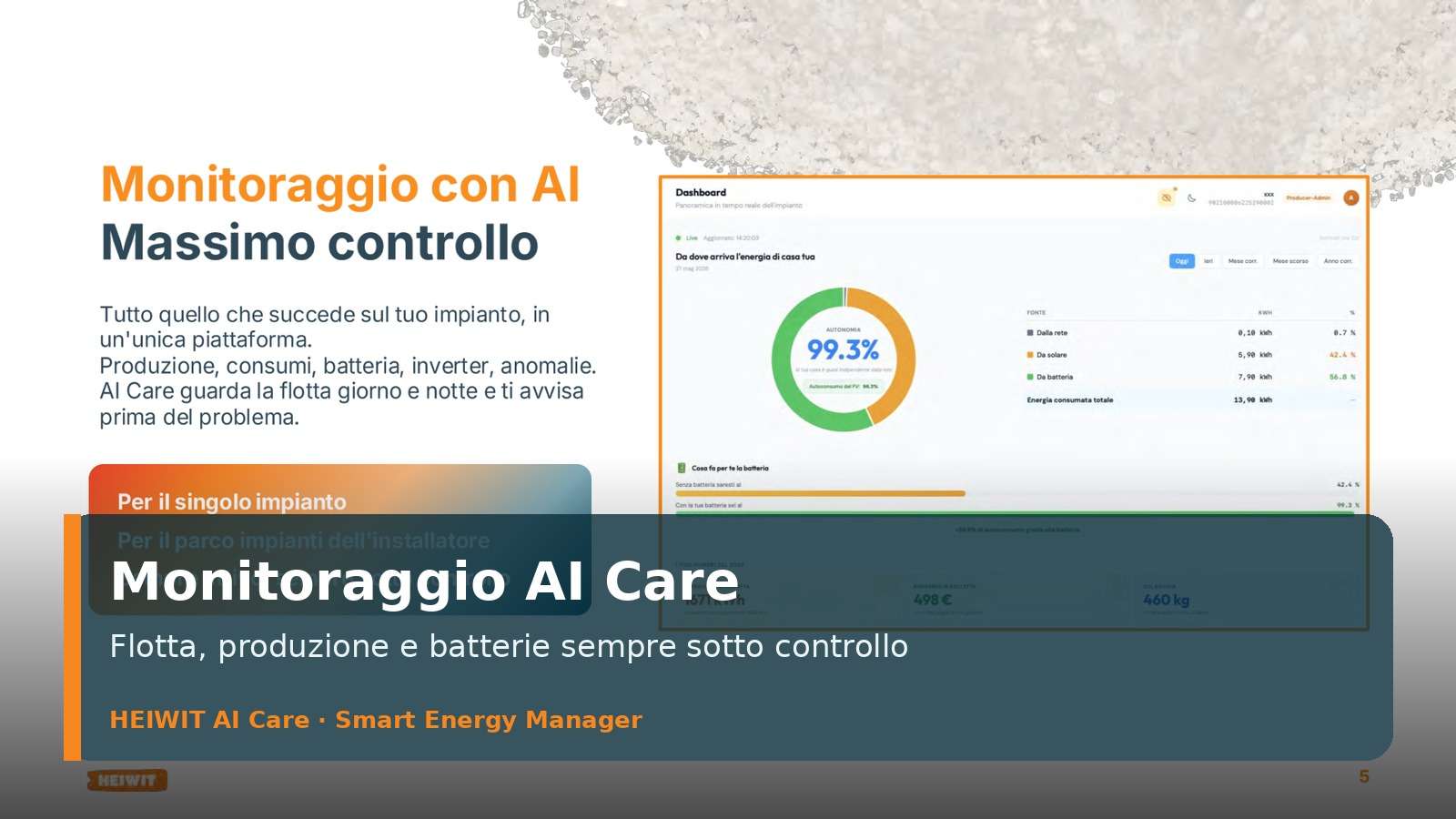
AI Care nasce per portare il monitoraggio del fotovoltaico a un livello superiore: non più una semplice schermata con produzione e consumi, ma una piattaforma intelligente che osserva l’impianto, interpreta i dati e aiuta installatore e cliente finale a intervenire prima che un’anomalia diventi un problema.
Un impianto fotovoltaico moderno non è composto solo da pannelli. Ci sono inverter, batterie, profili di consumo, energia prelevata dalla rete, energia immessa, condizioni meteo, prezzi orari dell’energia e comportamenti quotidiani dell’utente. Tutti questi elementi cambiano continuamente. Per questo il valore reale di un sistema di accumulo non dipende solo dall’hardware installato, ma anche dalla capacità di leggerne il funzionamento nel tempo.
Con AI Care, Heiwit porta in un’unica piattaforma tutto ciò che serve per capire cosa sta succedendo: produzione, consumi, batteria, inverter e anomalie. L’obiettivo è semplice: dare massimo controllo al proprietario dell’impianto e, allo stesso tempo, offrire all’installatore una visione completa del proprio parco impianti.
Dal singolo impianto alla flotta dell’installatore
Il monitoraggio tradizionale è spesso pensato per il singolo utente. AI Care ragiona invece su due livelli: il singolo impianto e la flotta dell’installatore. Questo cambia completamente il modo di fare assistenza. Il cliente finale può verificare in modo chiaro come sta lavorando il proprio sistema, mentre il professionista può controllare più installazioni da un unico ambiente operativo.
Per l’installatore significa non dover aspettare la telefonata del cliente per sapere che qualcosa non va. Una batteria che non lavora come previsto, un inverter che riduce la potenza, un impianto che produce meno rispetto all’atteso o un consumo anomalo possono essere intercettati in anticipo. Il monitoraggio diventa così uno strumento di qualità, assistenza programmata e relazione continua dopo la posa.
Actual production versus expected production
Uno dei punti più importanti è il confronto tra produzione effettiva e produzione attesa. Guardare solo i kWh prodotti non basta: bisogna capire se quei kWh sono coerenti con la posizione dell’impianto, l’orientamento, l’inclinazione, la stagione e le condizioni meteo. Un impianto può produrre meno per nuvole, ombreggiamenti, sporco sui moduli, problemi di configurazione o inefficienze tecniche. Senza un riferimento, questi segnali rimangono invisibili.
AI Care mette in relazione i dati dell’impianto con una stima attesa e consente di valutare lo scostamento. Questo permette di distinguere una giornata semplicemente meno favorevole da un comportamento che merita attenzione. È un passaggio fondamentale per trasformare il monitoraggio da “lettura passiva” a controllo intelligente.
Withdrawals, inflows and energy autonomy
Un altro elemento centrale è l’analisi dei flussi con la rete. Per capire se un impianto sta lavorando bene, bisogna sapere quando la casa preleva energia, quando la immette e quanta parte del fabbisogno viene coperta da sole e batteria. L’obiettivo non è solo produrre energia, ma usarla nel modo più efficiente possibile.
La piattaforma mostra il rapporto tra energia da rete, energia da fotovoltaico ed energia da batteria. Questo aiuta il cliente a capire quanto l’accumulo stia contribuendo alla propria autonomia e quanto stia riducendo il prelievo dalla rete. Per Heiwit, questo dato è essenziale: una batteria non deve essere percepita come un semplice componente aggiunto, ma come il cuore intelligente dell’impianto.
Meteo, PUN e dati esterni: perché servono al monitoraggio
Un sistema davvero evoluto non guarda solo dentro l’impianto. AI Care integra anche dati esterni, come previsioni meteo e andamento del prezzo dell’energia. Le condizioni atmosferiche incidono sulla produzione fotovoltaica; il prezzo zonale orario incide invece sul valore dell’energia immessa in rete. Collegare questi dati al funzionamento dell’impianto permette di avere una lettura molto più realistica.
Questo è il punto in cui il monitoraggio diventa la base dell’ottimizzazione. Se la piattaforma sa quanta energia potrebbe essere prodotta, quanta ne consuma il cliente, quando la batteria è carica e quale valore avrà l’energia nelle diverse ore del giorno, può costruire una strategia più efficace. Il monitoraggio non è più il punto di arrivo: è il punto di partenza per gestire meglio l’energia.
A new experience for the end customer
Per il cliente finale, AI Care semplifica la lettura dell’impianto. In un’unica interfaccia può vedere stato del sistema, produzione, risparmio, contributo della batteria e andamento dei consumi. Questo aumenta la consapevolezza e riduce la distanza tra tecnologia e uso quotidiano.
Un impianto fotovoltaico è spesso percepito come qualcosa che “lavora da solo”. In parte è vero, ma proprio per questo il cliente ha bisogno di fidarsi. Vedere dati chiari, ricevere segnalazioni tempestive e sapere che l’impianto è sotto controllo aumenta la tranquillità e rafforza il valore percepito dell’investimento energetico.
A competitive advantage for installers
Per gli installatori, AI Care rappresenta anche un argomento commerciale. Non significa vendere solo pannelli, inverter e batteria, ma proporre un impianto gestito da una piattaforma intelligente. Questo è un cambio di posizionamento: da installazione tecnica a servizio energetico continuativo.
Chi installa può differenziarsi offrendo monitoraggio, assistenza preventiva e strumenti evoluti di gestione. In un mercato sempre più competitivo, la capacità di seguire il cliente dopo la vendita diventa una leva decisiva. AI Care rende questo approccio più scalabile, perché centralizza le informazioni e permette di controllare molti impianti con una visione unica.
Conclusion
Il fotovoltaico del futuro non sarà solo più potente o più economico. Sarà più intelligente. AI Care nasce per questo: unire monitoraggio, dati e intelligenza operativa in una piattaforma pensata per migliorare controllo, assistenza e rendimento dell’impianto.
Per Heiwit, la batteria agli ioni di sodio è solo una parte della trasformazione. Il vero salto è costruire un ecosistema in cui hardware, software e dati lavorano insieme. Un impianto monitorato, interpretato e seguito nel tempo è un impianto più utile, più affidabile e più vicino alle esigenze reali di chi lo utilizza ogni giorno.
Gli installatori interessati possono richiedere l’attivazione e partecipare alla fase di sviluppo operativo della piattaforma.
Il monitoraggio dà il meglio su un impianto con accumulo, dove c’è davvero una scelta da ottimizzare: la gamma Heiwit agli ioni di sodio nasce per lavorare con AI Care.
 Italian
  English
  German
  French
  Spanish
  Polish
  Dutch
Dutch  Romanian
  Hungarian
  Czech
Czech  Swedish
  Portuguese
  Greek
Greek